

This booklet is for you, your family and friends if you have been referred for/or considering Electroconvulsive Therapy (ECT). It has been produced to try and allay your fears by providing pictorial information about the department and explain what will happen when you come for treatment.
Hello
This booklet is for you, your family and friends if you have been referred for/or considering Electroconvulsive Therapy (ECT).
ECT is a treatment for some types of severe mental illnesses that may not have responded to other treatments.
The thought of the treatment itself can be scary and difficult to comprehend, sometimes this is partly due to people not knowing what to expect. Your medical team will discuss the treatment with you, and you will be provided with literature to help you understand and make an informed decision.
This booklet has been produced to try and allay your fears by providing pictorial information about the department and explain what will happen when you come for treatment.
Visits to the department prior to treatment are always welcome; however, we realise that some people are unable to do so or may not want to - so, we hope this will help.
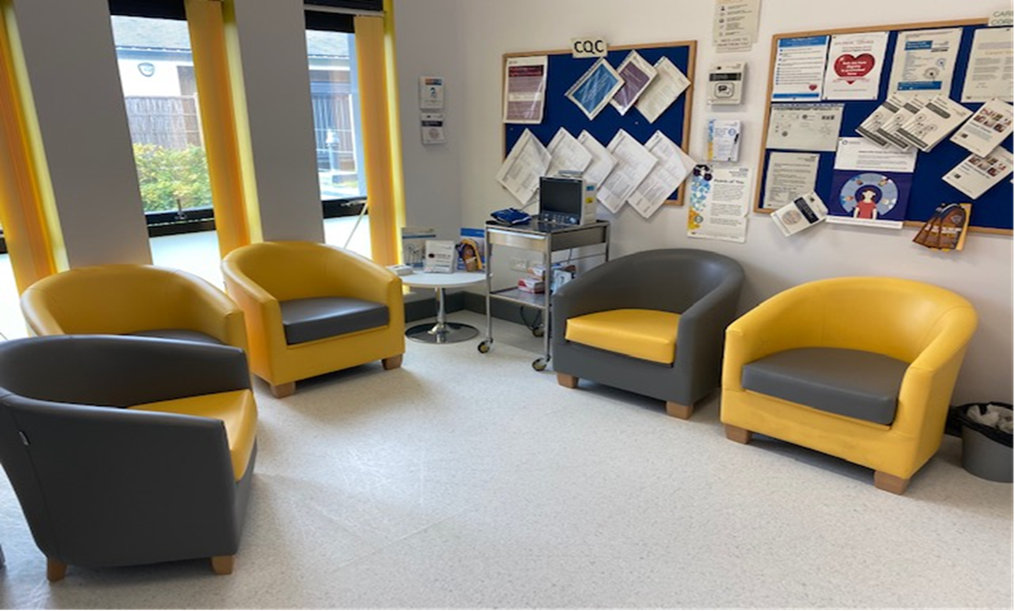
You will be escorted to the department by a member of staff who knows you or a family member (if an outpatient) to ensure you feel comfortable and supported.
When you arrive at the department you will be shown into the waiting and clerking-in area, where you will be welcomed by a member of the ECT nursing team.
Here you will be asked some simple questions about preparation prior to treatment, such as: when you last ate or drank, have you taken any medications, if you have any concerns.
You will also be asked the following orientation questions:
- Your full name
- Your date of birth
- The town or city you live in
- The name of the hospital you are in
- The date
These questions will be asked again following treatment.
We will then take your temperature, complete a checklist with you, and pass all the information over to the team before taking you through to the treatment room.
This is the treatment room.
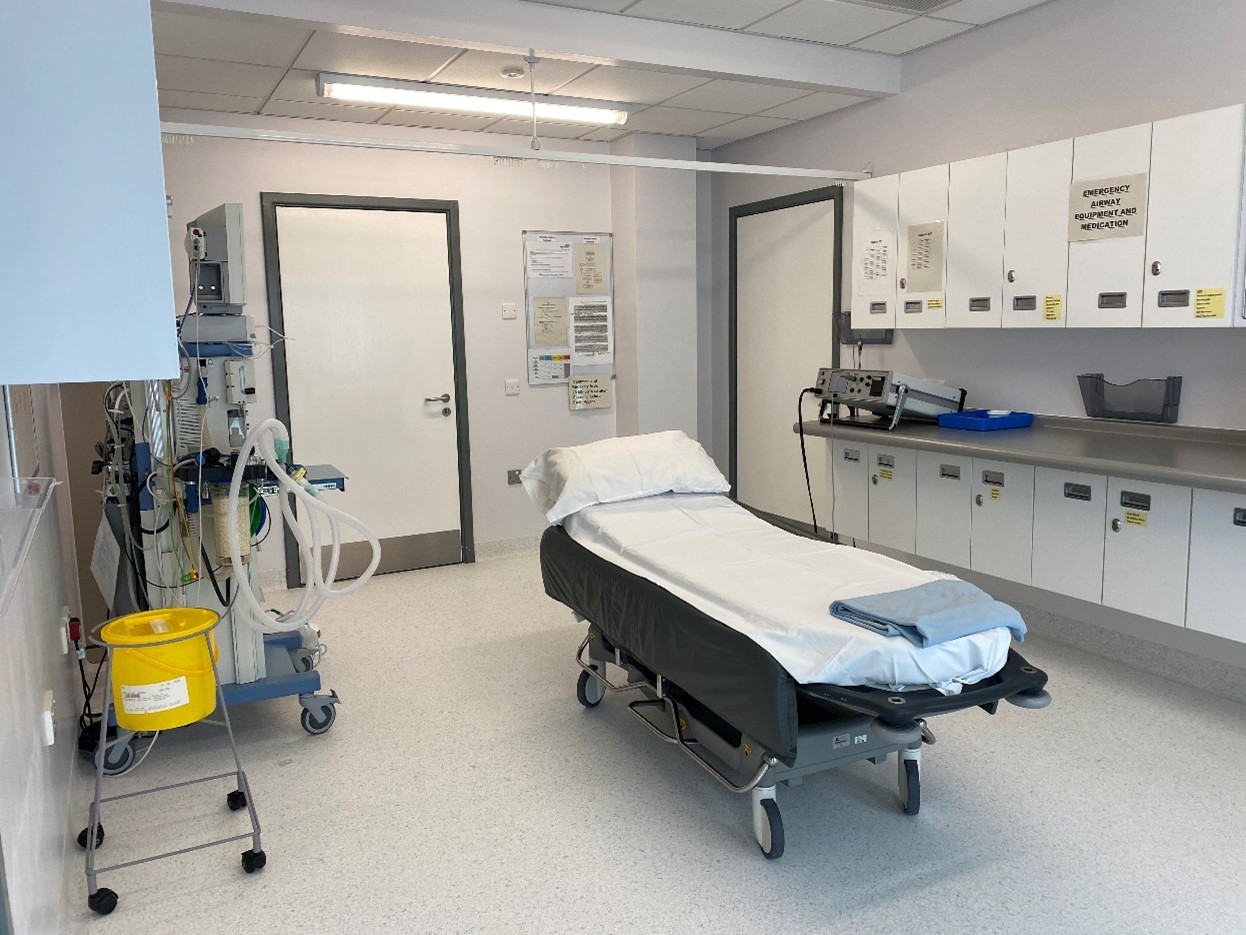
You will be shown into the treatment room and asked to remove any outerwear, so you can be monitored throughout the treatment. It might be best to wear a t-shirt or thin, long-sleeved top under any cardigans or thick jumpers.
We advise patients to not bring any valuables to the ECT clinic.
You will be asked to lie down on the bed and to try to relax. If you are particularly anxious your escorting nurse can come into the treatment room with you until you are asleep.
Sticky pads will be placed on your chest, a cuff around your arm and a small probe on your finger to monitor your breathing and heart rate throughout the treatment. This will be carried out by an anaesthetic assistant.
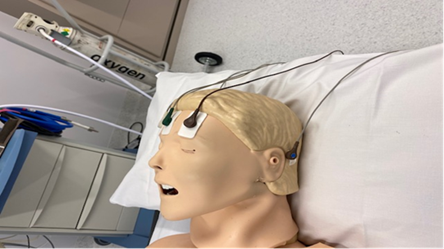
The ECT Nurse will clean your brow, temples and behind your ears with alcohol wipes before applying some EEG stickers to those areas. This is to monitor the seizure.
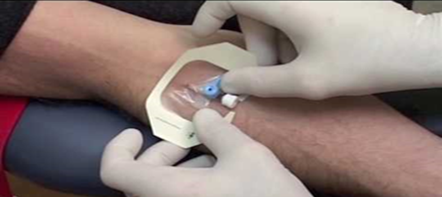
The anaesthetist will insert a needle either in the back of your hand or in your arm.
Oxygen will be given through a face mask.
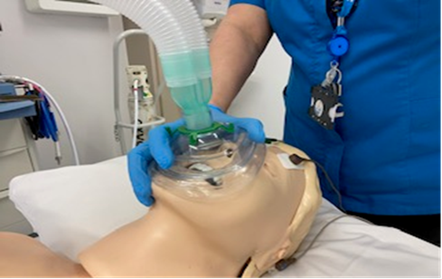
The anaesthetist will then administer the medication, which will make you go to sleep and relax your muscles.
This is only for a short time and you will be monitored throughout.
Following treatment you will be transferred to the first recovery room for a period of 20 minutes, or longer. If you are an outpatient you will remain for at least 1 hour.
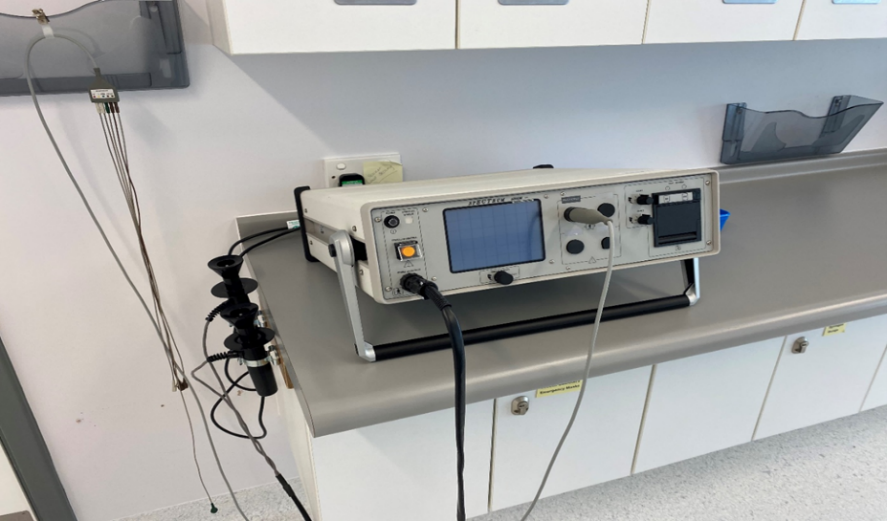
This is the ECT machine which will deliver the electric current.
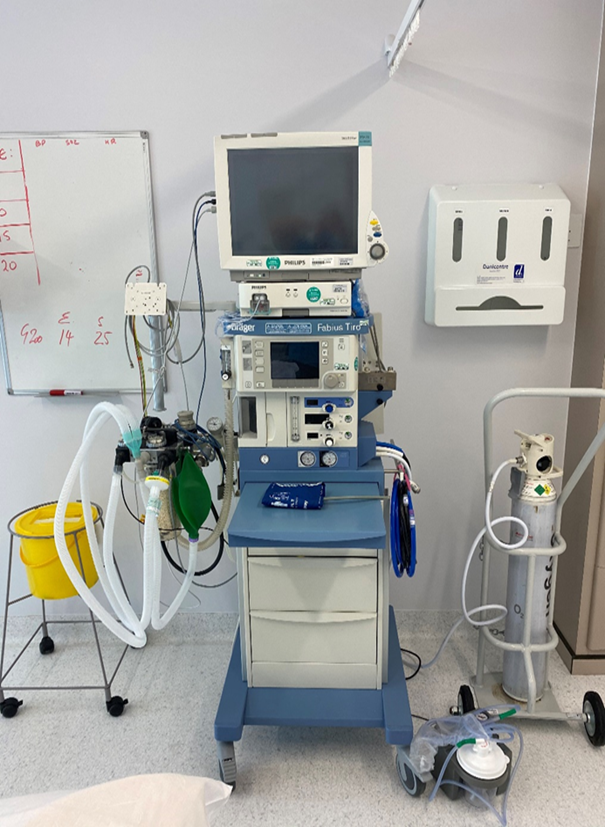
This is the anaesthetic machine.
Our team consists of the following:
- A Specialist Nurse
- A Clinical Lead Nurse
- Two Staff Nurses
- A Trust Lead ECT Consultant
- A Locality Lead Consultant
- A Lead Anaesthetist and associates
All staff will introduce themselves.
In the treatment room there will be four essential staff members:
- A consultant psychiatrist – the doctor who administers the treatment
- A consultant anaesthetist – the doctor who administers the medication to help you go to sleep
- An ECT nurse – assists with administration of treatment and assists in recovery following the treatment
- An Operating Department Practitioner/anaesthetic nurse – assists the anaesthetist
Sometimes a trainee doctor is present in the room. This is a qualified doctor who is gaining experience in ECT and may deliver your treatment under supervision of the consultant. Medical/nurse students may also be present, and you will be asked at clerking if you don’t want them to be present.
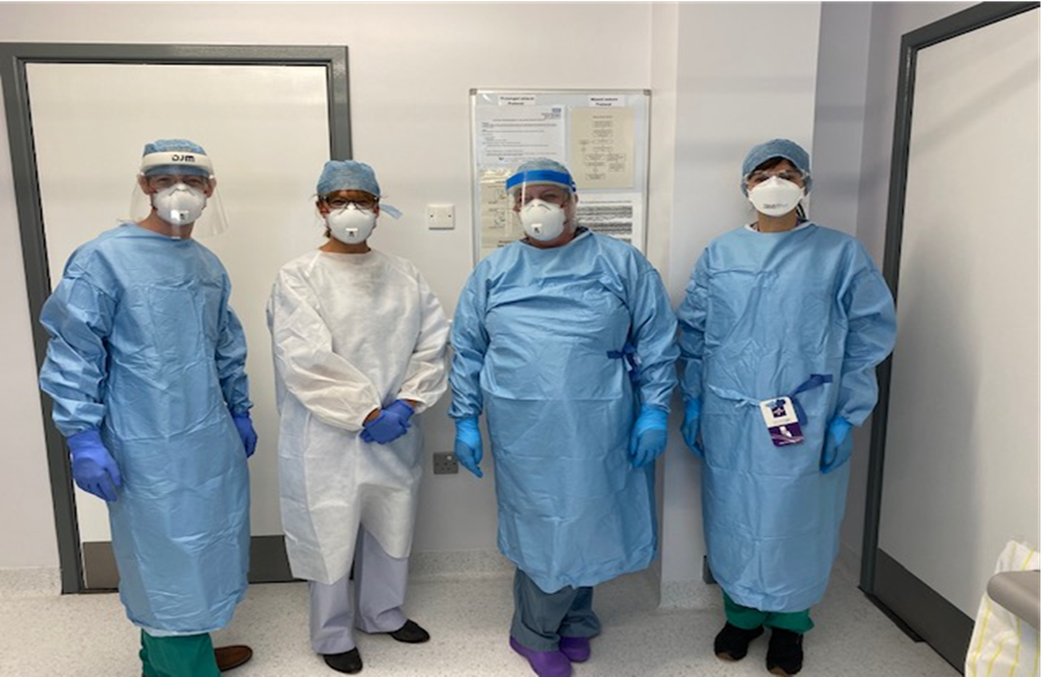
Staff may need to wear the following personal protective equipment (PPE) in the clinic. This is for your safety and their own. They may be dressed like this picture below.
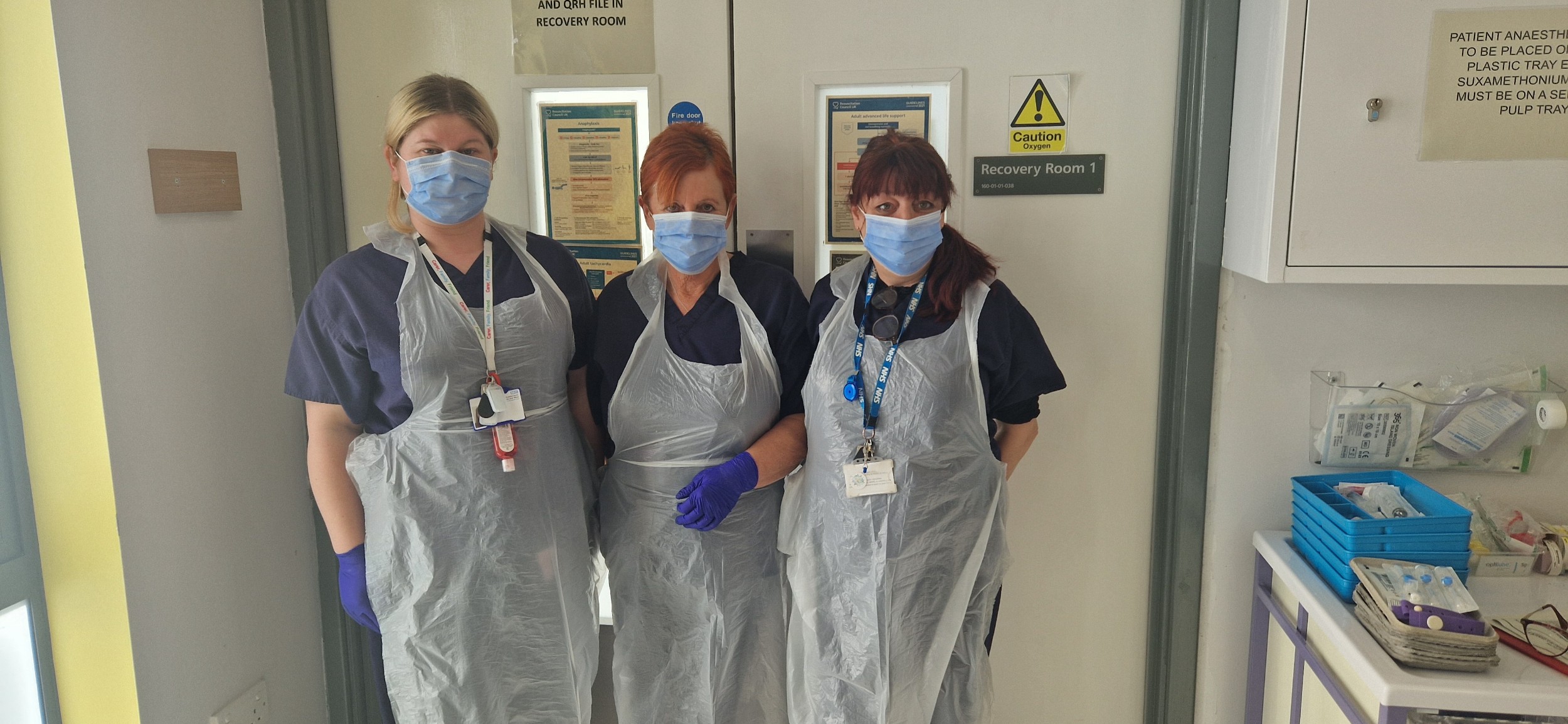
On very rare occasions, staff may need to wear the following personal protective equipment (PPE). This is for your safety, and theirs, so don’t be alarmed!
This is the first recovery room.
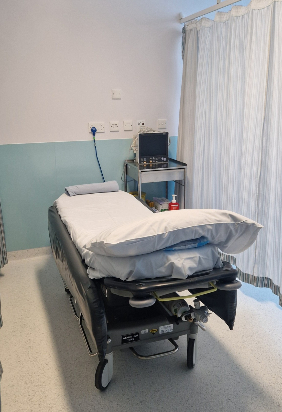
During the recovery period, you will receive oxygen through a mask, continue to have your physical health observations monitored and allowed time to rest and wake until you feel able to get up.
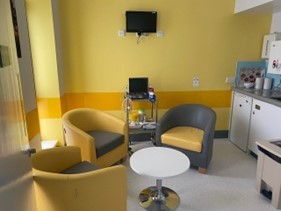
The second recovery room is a small quiet area where you have time to sit and recover a little more. It has facilities for you to have a hot or cold drink and something to eat following treatment. There are also toilet facilities next to this area. You will be greeted by your escorting nurse or family member and the ECT recovery nurse will be on hand to monitor and reassure you.
The ECT recovery nurse will check your physical observations at specific intervals, remove the needle out of your hand and ask you orientation questions again as well as observe you closely.
When fully recovered, you can return to your ward/home. As you have had a general anaesthetic you must remain in the company of a responsible adult for 24 hours and follow all guidelines in Post Treatment Information for Patients Receiving ECT leaflet.
As mentioned earlier we welcome visits to the department prior to treatment and this is easily arranged by speaking to the ECT staff – feel free to contact the suite at any time.
Hopewood Park ECT
Barton Centre
Hopewood Park
Waterworks Road
Ryhope
Sunderland
SR2 0NB
Telephone: 0191 566 5745
Sessions are held on Tuesday and Friday, 8am to 1pm
Hopewood Park is on Stockton Road in Ryhope, near Sunderland. The hospital can be easily accessed by public transport or by car.
Below we have provided directions to Hopewood Park. You can also get directions on Google Maps
Driving directions - A1 from the North:
- Travelling on the A1, exit onto the A1231 towards Washington/ Sunderland
- At the roundabout, take the third exit onto Sunderland Hwy/ A1231
- At the roundabout, take the second exit and stay on Sunderland Hwy/ A1231
- At the roundabout, take the third exit onto the A19 slip road to Teesside
- Merge into the A19, then take the B1404 exit towards Seaham
- Turn left onto Seaton Lane/ B1404. Then turn left onto Stockton Road/ B1285
- Continue to follow the B1285. Then, at the roundabout take the third exit onto Stockton Road/ A1018
- Continue along Stockton Road, then drive to Waterworks Road and Hopewood Park
Driving directions - A1 from the South:
- Travelling on the A1, at junction 62, take the A690 exit to Sunderland/ Durham/ Consett/ A691
- At the roundabout, take the third exit onto the A690
- Take Burdon Lane to Waterworks Road and Hopewood Park
Car parking
A member of the ECT team will discuss car parking options with patients, before their treatment commences.
Getting here by bus
From the Sunderland Park Lane Interchange, the following bus services run frequently to the Ryhope Hospitals bus stop, and Hopewood Park is about a five-minute walk:
- Buses 23, 24, 60 and 61
If you want to make a comment, suggestion, compliment or complaint you can:
- talk to the people directly involved in your care
- ask a member of staff for a feedback form, or complete a form on the Trust website www.
cntw.nhs.uk/ contact/ complaints/ - telephone the Complaints Department Tel: 0191 245 6672
- email complaints
@cntw.nhs.uk
We are always looking at ways to improve services. Your feedback allows us to monitor the quality of our services and act upon issues that you bring to our attention.
You can provide feedback in the following ways:
- the quickest way for you to do this is to complete our short online survey at www.
- complete a Your Voice survey, available on wards, reception areas or from staff
- other options for sharing your feedback and experience www.
Patient Advice and Liaison Service (PALS)
PALS provide confidential advice and support, helping you to sort out any concerns that you may have about any aspect of your or your loved ones care.
We act independently when handling patient and family concerns, liaising with staff, managers and, where appropriate, relevant organisations, to negotiate prompt solutions. If necessary, we can also refer patients and families to specific local or national-based support agencies.
South of Tyne
Tel: 0800 328 4397
Text: 07825 061 035
Email: pals
Post: Patient Advice and Liaison Service, Garden Lodge, Hopewood Park, Ryhope, Sunderland, SR2 0NB
9am – 4.30 pm, Monday to Friday
An answerphone is available at all times for you to leave a message. A member of the PALS team will aim to return your call as soon as possible.
Care Quality Commission (CQC)
CQC National Customer Service Centre
City Gate
Gallowgate
Newcastle upon Tyne
NE1 4PA
Email: enquiries
Telephone: 03000 61 61 61
Advocacy Service
Sunderland Voiceability
Email: helpline
Website: www.
Telephone: 0300 303 1660
Sometimes it can be difficult for people to speak up for themselves. An advocate is somebody who can work with you to help you have your say about things.
Further information about the content, reference sources or production of this leaflet can be obtained from the Patient Information Centre. If you would like to tell us what you think about this leaflet please get in touch.
This information can be made available in a range of formats on request (eg Braille, audio, larger print, easy read, BSL or other languages). Please contact the Patient Information Centre on 0191 246 7288
Published by the Patient Information Centre
2025 Copyright, Cumbria, Northumberland, Tyne and Wear NHS Foundation Trust
Ref: PIC/849/0325 March 2025 V4
www.
Telephone: 0191 246 7288
Review date 2028