
Physical and Public Health Strategy 2025 - 2028
Introduction
Welcome to Cumbria, Northumberland, Tyne and Wear Foundation Trust’s (CNTW) Triangle of Care (ToC) Annual Report 2024. This report will provide details in respect of the Trust’s progress against the Triangle of Care standards, and demonstrate to carers and the Carers Trust how CNTW is working to create an inclusive culture where carers, service users and staff work together to provide excellent healthcare. Carers Trust, supported by the Triangle of Care National Steering Group, is responsible for the delivery of the accreditation scheme.
CNTW is proud to have maintained Triangle of Care accreditation for over 10 years and remains committed to ensuring all staff adopt good practice when working with carers and families.
There are an estimated seven million unpaid carers in the UK, 13% of whom support people with mental health conditions. These carers can provide vital insight into the treatment and condition of those they care for. The Triangle of Care is based on six principles which health and care providers can use to include and support unpaid carers, staff and those receiving care:
- Carers and their essential role are identified at first contact, or as soon as possible thereafter.
- Staff are ‘carer aware’ and trained in carer engagement strategies.
- Policy and practice protocols re: confidentiality and sharing information are in place.
- Defined post(s) responsible for carers are in place.
- A carer introduction to the service is available, with a relevant range of information across the care pathway.
- A range of carer support services is available.
All NHS healthcare providers are required to produce an annual Quality Account, to provide information on the quality of services they deliver and, in line with national guidance, CNTW’s Quality Priorities 2024-25 now include Triangle of Care standards.
The standards are designed to ensure families, friends and carers are better involved and informed in the provision of care and supported in their caring role. The Trust is working to ensure that these six principles are embedded in everyday practice, creating an inclusive culture where carers, service users and staff work together to ensure excellent health care is provided across all service areas.
This report has been co-produced with service users, carers and staff. We would like to thank all of those involved for their time and continued dedication in the design and development of this report and their commitment to the Triangle of Care.
Carer Promise
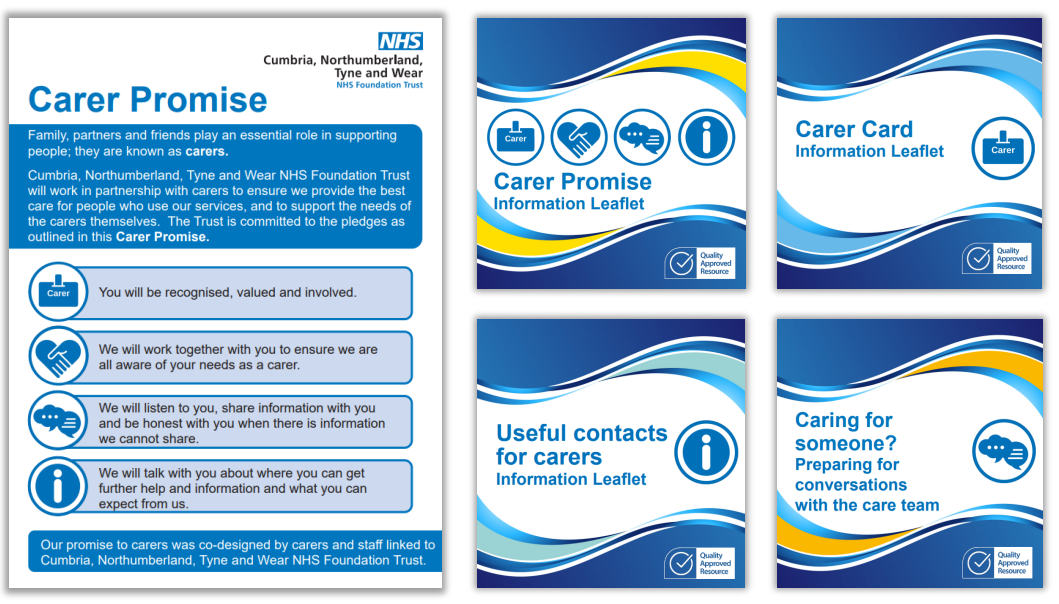
The Carer Promise was launched in 2023 to define the Trust’s commitment to carers. Carers were an integral part of the co-creation of the Carer Promise, which contains four key pledges that align to the Triangle of Care:
- You will be recognised, valued and involved.
- We will work together with you to ensure we are all aware of your needs as a carer.
- We will listen to you, share information with you, and be honest when there is information we cannot share.
- We will talk with you about where you can get further help and information, and what you can expect from us.
Carer Promise information sessions were offered to all teams within CNTW on its launch and Carer packs were disseminated to every team to share with carers. All main hospital sites have a Carer Promise banner and Carer Card posters on display.
How carers are involved
Carer involvement models and initiatives continue to be a priority for the Trust and improved practices enable CNTW to meet its commitment to carers. Supportive frameworks in the engagement of carers and our communities allow people to safely share their expertise.
Involvement Bank
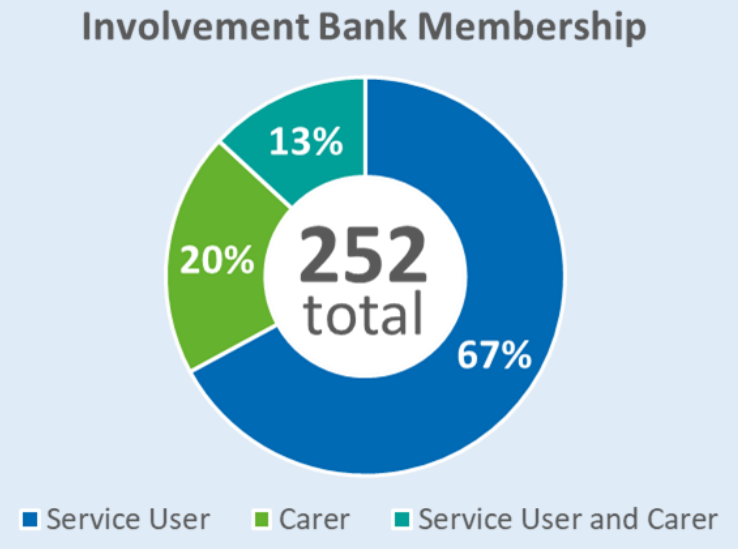
and service users in service design and delivery. Carers and service users who join
the Involvement Bank (Contributors) are supported to take part in involvement activities such as staff interviews, training, inspections and working groups.
In 2021 an offer of a recognition payment was introduced for Contributors taking part in Involvement Bank activities in acknowledgement of their time and expertise.
“It is easy to think that the Involvement Bank is about just helping CNTW,
sometimes the best therapy is the one that doesn’t feel like therapy - the
Involvement Bank is just that.” - Involvement Bank Contributor
In March 2024 there were 252 Contributors on the Involvement Bank, which is an increase from 2023 which reported 198 Contributors.
Youth Involvement Bank
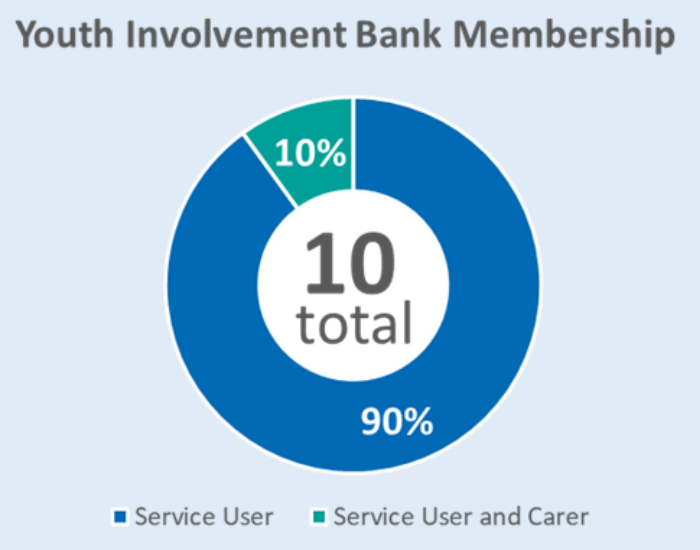
for the involvement of young people aged 14 -17 years old with lived experience either as a carer or a service user.
Young people are supported to participate in involvement opportunities, such as working groups and recruitment, to contribute to the design, development, and delivery of services in a safe and meaningful manner.
When young people reach the age of 18, they are offered the opportunity to join the Involvement Bank to continue to use their lived experience to shape and develop services. Membership of the Youth Involvement Bank at the end of March 2024 reached 10 Contributors.
Service User and Carer Reference Group
The Service User and Carer Reference Group (SUCRG) is a service user and carer led forum. Membership includes individual carers and service users as well as statutory services and third sector community groups who provide valuable critique and expertise to CNTW.
CNTW is committed to the SUCRG to ensure service users, carers, partners and staff have opportunities to be involved in and are aware of key developments. Senior leadership are in attendance to ensure people’s views are heard and acted upon. A steering group of service users, carers and facilitators take feedback and direction from members of the SUCRG and agree future themes, presentations, and the agenda for each meeting. Themes for the past year included:
- Secure Services
- The Together Strategy
- Crisis
- Neurodiversity
- Seclusion and Inpatient Care
- Children and Young Peoples Services
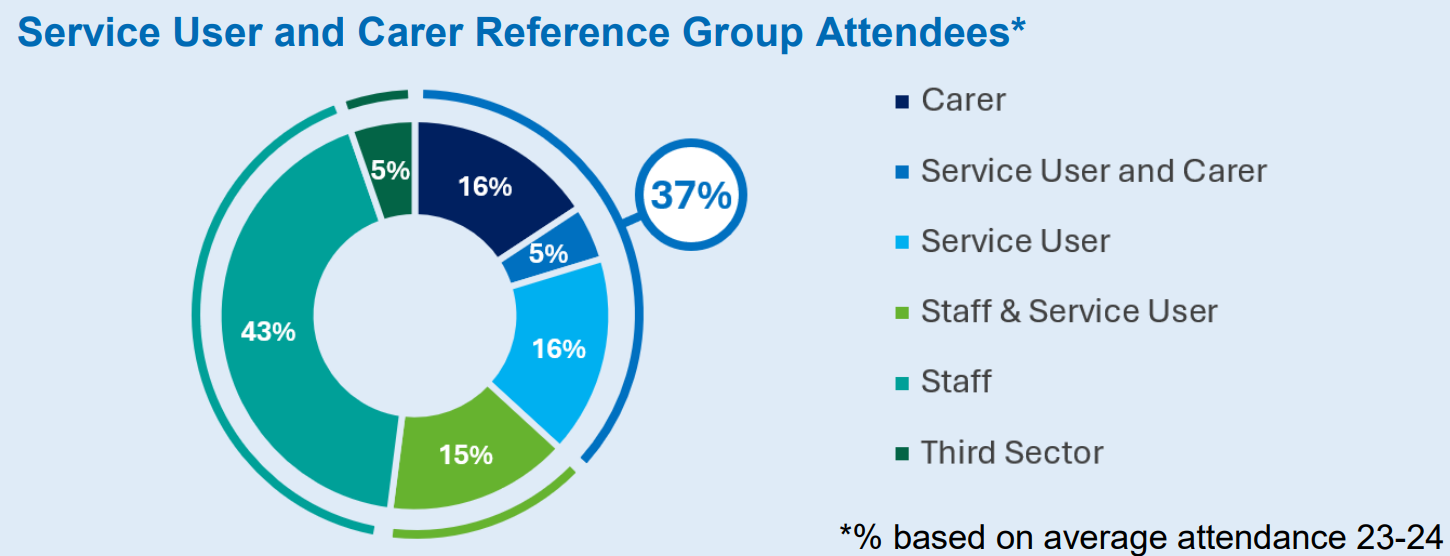
The group has a healthy attendance, with approximately 100 people at each meeting, consisting of service users, carers, staff, and third sector organisations. Efforts to increase the number of service users and carers in attendance were undertaken in 2023. This improved the average service user and carer number of attendees to 37%, or 52% when including staff who are also service users or carers. A similar push is now being made to increase third sector representation.
Carers Together Advisory Group
The Carers Together Advisory Group supports the Trust in the delivery of the Carer Promise undertaking co-production projects such as the co-design of the new Carer Awareness Training and review of carer resources, as well as offering views from a carer perspective to the Trustwide Involvement and Experience Oversight Group.
Membership includes carers, Carer Champions, Carer Leads, a Carer Governor, external carer organisations and staff who are carers.
Trustwide Involvement and Experience Oversight Group
The Trustwide Involvement and Experience Oversight Group meets quarterly to monitor and support the implementation of Triangle of Care requirements and provide assurance that there are effective systems and processes in place for the management of patient and carer involvement and experience. The group is chaired by the Executive Director of Nursing, Therapies and Quality Assurance, with membership from operational and corporate services, directorate Involvement Leads and Deputies, and service user and carer representatives.
North East and North Cumbria Regional Triangle of Care Group
In October 2023, CNTW supported the Carers Trust with the launch of the North East and North Cumbria Regional Triangle of Care Group. This new partnership and networking platform brought together NHS acute and mental health providers from across the geographical area. CNTW’s Patient and Carer Involvement Service saw this new regional platform as an opportunity for an innovative approach at a regional level. Attendees at the event provided representation from:
- Carers Trust
- Cygnet Healthcare
- Northumbria Healthcare NHS Foundation Trust
- Gateshead Health NHS Foundation Trust
- County Durham and Darlington NHS Foundation Trust
- North East and North Cumbria Integrated Care Board
- North Tees and Hartlepool NHS Foundation Trust
- Cumbria, Northumberland, Tyne and Wear NHS Foundation Trust
- Tees, Esk and Wear Valleys NHS Foundation Trust
The event offered those with limited experience of the Triangle of Care an overview of its principles and the accreditation process, with an opportunity for open discussion. The group was asked to consider what they could achieve for carers at a regional level and if this was a platform they wished to remain involved in. Agreed outcomes included:
- All organisations were inspired by the examples of good practice and were keen to remain as members of the group for future discussions.
- All organisations agreed a regional carer passport was something that could have a real positive impact.
- Organisations were interested in entering into discussions with the Carers Trust and becoming the first acute Trusts to pilot Triangle of Care.
Bi-annual meetings of the NENC Regional Triangle of Care Group are scheduled to be hosted by CNTW, for future partnership working in support of carers.
Triangle of Care Meetings
Triangle of Care meetings are in place in each of the Trust’s four localities to monitor and support the implementation of the six key standards as outlined in the Triangle of Care. Membership of the meetings includes representatives from across individual services as well as carers and service users to act as that critical friend. Each meeting focuses on one of the six standards, this provides opportunities to look at performance and gaps in-depth, considering challenges and opportunities when exploring the criteria within those standards.
Carers Week 2023
unpaid carers face and recognise the contribution they make to families and communities.
The Involvement Service implemented a programme of carer events which focussed on the 2023 theme of ‘Recognising and Supporting Carers in the community’.
129 people attended an informative online session where presentations and discussions were facilitated on how the Carer Lead role is supporting children’s services to recognise young carers and how the Carer Champion role is supporting
services to meet our pledges identified in the Carer Promise.
The service also delivered a ‘Carer Promise Information Session’ to inform carers and staff of the new co-produced carer leaflets and resources.
During the session, the Trust’s Lead Governor spoke about the importance of having a Carer Governor role, and the Trust’s Chair shared his views on the importance of carer support and his hopes for the future. A Carer Contributor and a Peer Supporter shared personal insights about their roles as a carer and why this work is so important.
“Just a huge thank you to all the presenters and guests for taking time to promote the importance of putting carers and families front and centre in helping CNTW to deliver the best possible service to all of those seeking our support. Many thanks to all those involved in the organisation and delivery of a very informative, enjoyable session.”
Carer Feedback
Getting to Know You as a Carer
person being cared for. By using a 'Think Family' approach our staff aim to gain a
better understanding of the patients background and family circumstances as
well as identifying more quickly the patient’s main carer(s). This has recently
been renamed as Getting to Know You as a Carer.
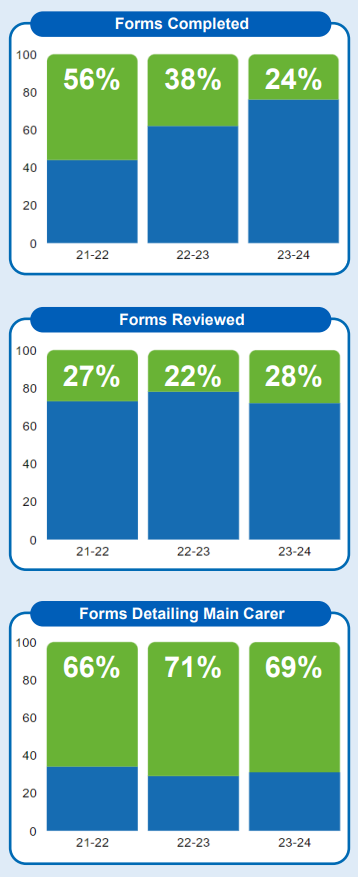
The 2023-2024 audit of patient records showed that of the 90,699 open referrals
within the Trust, 21,914 had a Getting to Know you form completed (24%).
Of 21,914 forms, 6,182 were reviewed in the last 12 months (28%). Of the 21,914 forms, 15,230 detailed a Main Carer (69%).
2023-2024 saw a further reduction in the percentage of forms being completed by
staff, however the number of forms that were reviewed in that period saw an
increase of 6% compared with 2022-23.
Recognising a significant decrease in completion rates year on year, a review
of the ‘Getting to Know You as a Carer’ form has been commissioned and will be
undertaken jointly with carers. Carer Awareness Training will also include
specific direction to staff to complete the documentation at the first opportunity,
and a reminder to continue to review and update these records as circumstances
change.
Complaints
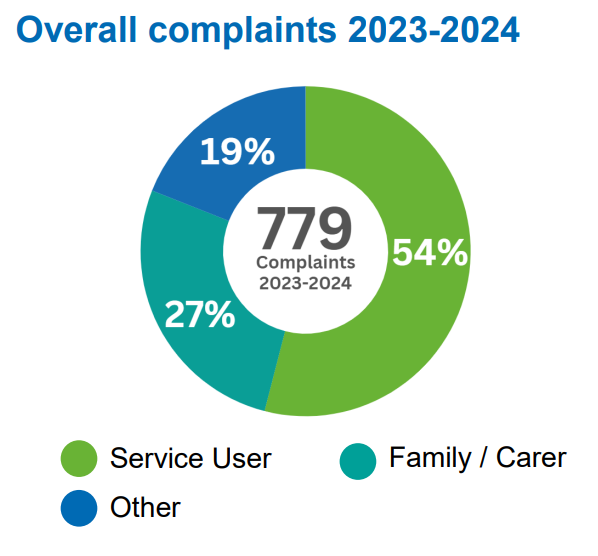
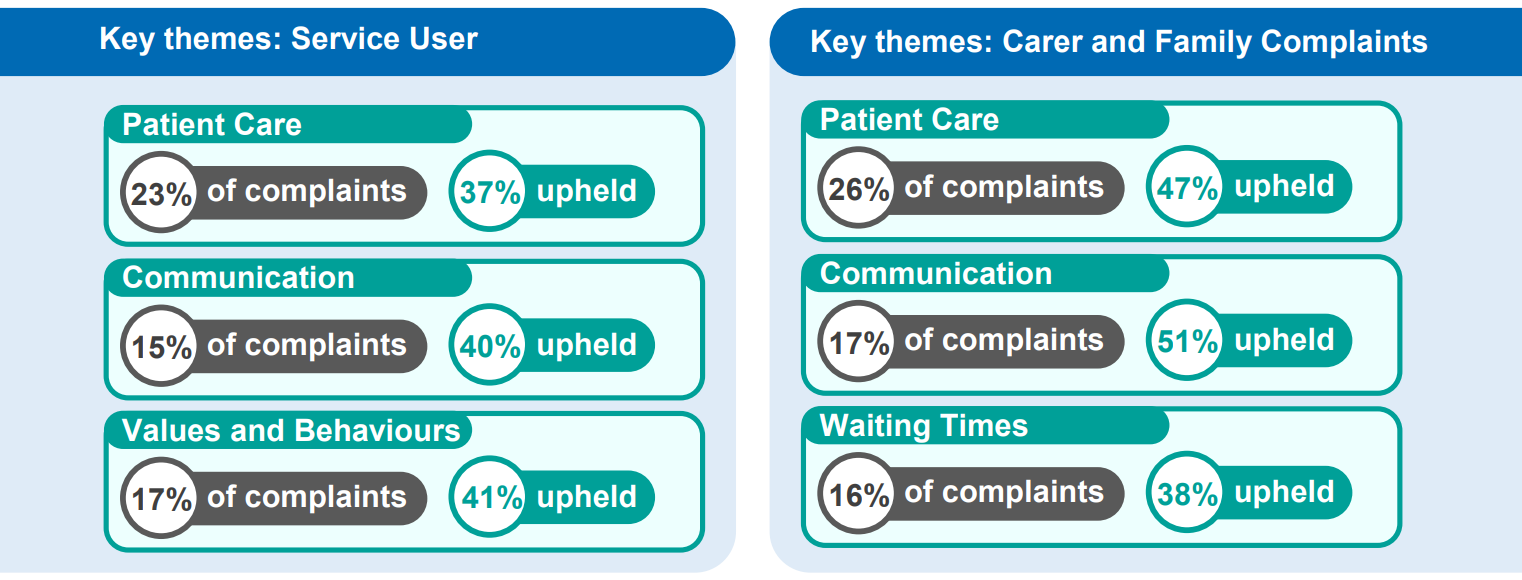
Key themes identified by service users were in relation to patient care, communication as well as values and behaviours.
Key themes from carer and family member complaints were patient care, communication and waiting times.
Complaints Case Study
In line with ‘patient care’ and ‘communication’ being the top two key themes identified by both
service users and carers, the following case study gives an example of an issue raised by the
parents of a service user in relation to these themes. The case study also acts as an example of
how the Trust addresses complaints, as well as providing the outcomes and actions in respect of
this specific case. All names and dates have been changed to anonymise this study.
Complaint: A complaint was received from Bill and Doreen, parents of a service user Matthew regarding a lack of communication and support for Matthew and themselves whilst Matthew was on a waiting list for treatment.
Investigation: An Investigating Officer was appointed and spoke with Bill and Doreen about the issues they had raised in further detail.
The investigation found that Matthew had been referred to a community team within the Trust
in February 2024 where a face to face appointment had taken place with Matthew, Bill and Doreen. A letter was then sent to Matthew and his GP recommending six sessions of treatment followed by a review to see what further treatment might be required. Matthew was added to the waiting list.
CNTW guidance states that all service users placed on waiting lists should be sent a letter
providing service information (such as contact details) as well as signposting to local
organisations and self-help materials. Where consent is given, this information is also shared
with a family member or carer.
In addition, CNTW guidance states that if a person is waiting longer than 4 weeks for treatment, they should be contacted by telephone once per month, and after 12 weeks a further face to face review should be arranged.
The investigation found that this did not happen consistently for Matthew. Attempts at telephone contact were made on 5 occasions. There was a 4 month gap after these attempts before a text message was sent to Matthew asking him to contact the team.
A face to face review was then completed and a letter setting expectations for waiting list
reviews was sent to Matthew.
Outcome: It was acknowledged that there were gaps in Matthew’s contact with the community team that were far longer than the expected 4 week telephone contact and 12 week face to face review, even when accounting for missed calls or cancelled appointments. Sincere apologies were
given for this failing.
Action taken: A review took place to ensure that appropriate information is shared, in order to set
expectations of how waiting lists are managed and whether these expectations are being met.
Procedures have been established to clarify what action is required if contact cannot be made
while completing waiting list reviews, both through telephone and face to face.
Letter templates have been reviewed to ensure they include the necessary information about
the purpose of the planned appointment and how this relates to previous contacts and care
treatment.
The community team have reviewed the support that can be provided while service users are
waiting for treatment.
Points of You
During 2023-2024 the Trust received 1,183 Points of You (PoY) experience surveys from carers, this was a 14% increase on the previous year.
The survey offers CNTW and individual teams an overview of satisfaction as well as themes coming from comments in respect of each of the 7 questions.
- 85% of carers said they had a good experience overall of services.
- 95% of carers said staff were kind and caring.
- 93% of carers said they felt safe with CNTW services.
- 87% of carers said they were given information that was helpful.
- 88% of carers said they felt listened to when decisions were made about
care and treatment.
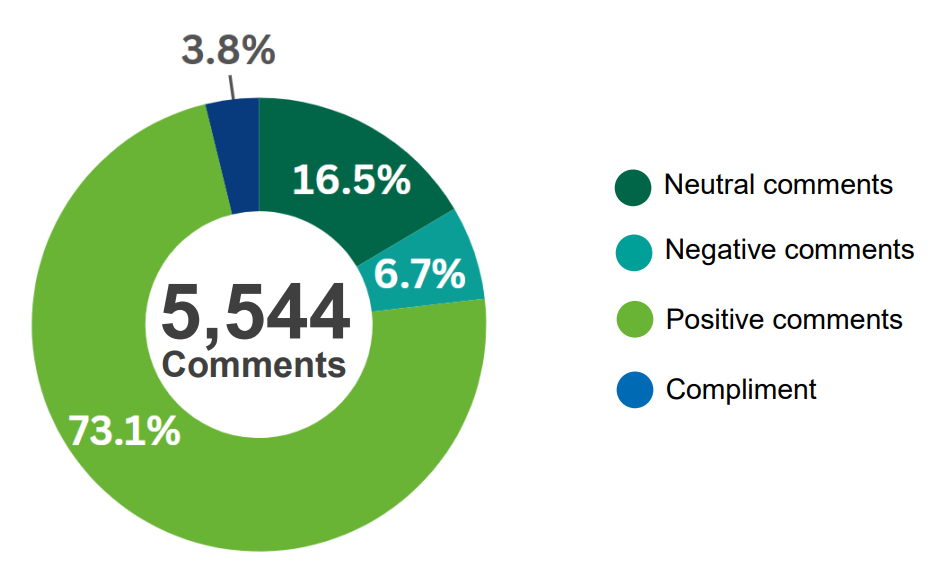
“I always felt listened to and supported in our monthly meetings. The clinician was very understanding and, knowing that the support was there should we need it in the future, was very reassuring.” - Carer, PoY Feedback
Triangle of Care Self-Assessments
The Triangle of Care approach to completing self-assessments is different to other audit processes in that there is no pass or fail. It is about an opportunity to truly reflect on current practice and start putting the building blocks in place to achieve cultural change for the benefit of all. This means services should not be afraid to score themselves red or amber if they don’t feel confident that they are fully meeting a criteria or that they can fully evidence it.
Each service area within CNTW has a responsibility to review the self-assessment tool and provide details on the status of ToC action plans to demonstrate how the ToC standards, and the criteria identified in each of these standards, continue to be implemented, progressed and developed.
Service users and carers are fully involved in this process to act as a critical friend and ensure transparency when completing self-assessments within specific Triangle of Care meetings.

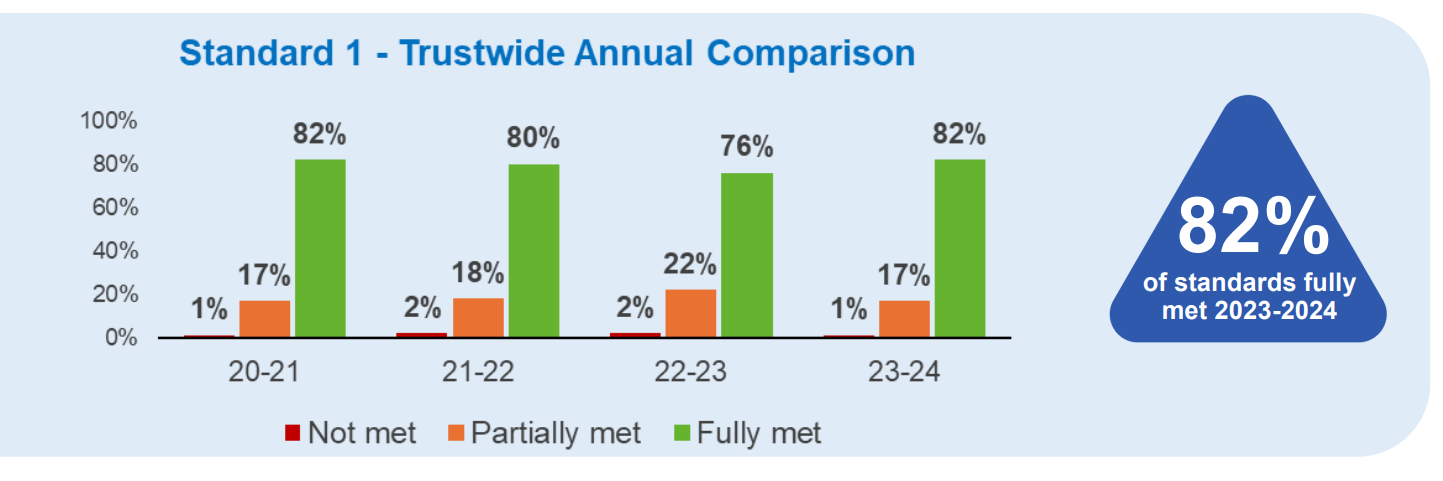
Highlights of Standard 1: Carers and the essential role they play are identified at first contact, or as soon as possible thereafter.
What is working well
CNTW ensures that carers are identified as early as possible in their caring journey, involved in the care and support of the person they care for, and are provided with support in their own right.
Carers are given an information pack at an initial appointment including a Carer Card and supporting information. The Carer Card is a way of ensuring carers are fully recognised and valued for their involvement in the care of people accessing services. Additionally, the Carer Card offers 50% discount in CNTW cafes and free onsite
parking. Carers are also given a Carer Promise leaflet, which summarises key information in one place.
We have seen an increase in services fully meeting this standard in comparison to last year. This may be directly linked to the introduction of the Carer Promise and the Carer Card.
4000+ cards have been issued. 398 cars have been registered for free onsite parking. The discount has been used in cafes 3,504 times.
What we are working on
Services reported that carers do not always recognise themselves as carers and that further work is required around identifying and supporting unpaid carers.
Furthermore, services evidenced how they are identifying and engaging with carers through the initial assessment with the service users, and recording this information in different ways, for example via ‘Getting to Know You as a Carer’.
As previously identified, there has been a reduction in ‘Getting to Know You as a Carer’ forms which have been completed over the course of the last two years. This will be addressed in the newly updated Carer Awareness Training, ensuring staff are aware of this process and the correct recording of carer information within the carer record.
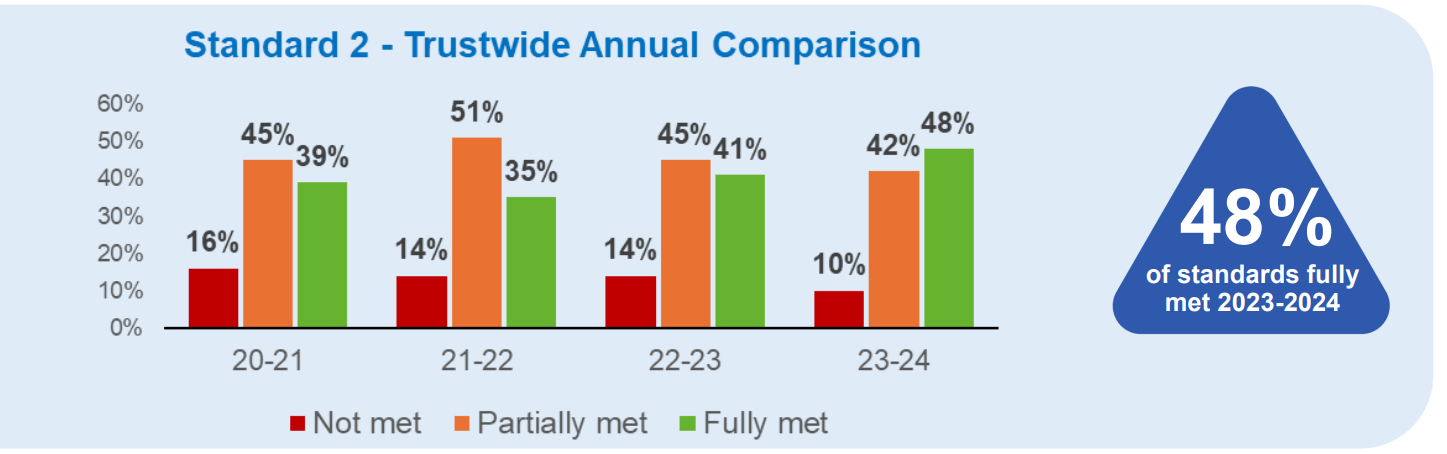
Highlights of Standard 2: Staff are ‘carer aware’ and trained in carer engagement strategies.
What is working well
CNTW co-produced the Staff Carer Awareness Training in order to improve engagement between staff and carers. In 2023 this training was reviewed and newly co-produced by a core group of carers, staff who are carers, and staff working with carers.
The training provides information based on the four pledges of the Carer Promise, supporting staff to work with carers, families and friends. An updated template slide-set was carefully produced to reflect best practice and CNTW’s commitment to carers, in line with the Triangle of Care, the Carer Promise and NICE guidance. All staff carer awareness training is co-facilitated with a carer, or if a carer is not available a staff member who also has a caring role.
There has been a 7% improvement in staff attendance at the Carer Awareness Training sessions being delivered within services. This reflects that the promotion planning is indeed starting to have a positive impact, however there is still a need for considerable improvement.
What we are working on
There continues to be inconsistency in the centralised capture of Carer Awareness Training attendance records and locality figures. The development of an electronic Triangle of Care dashboard could support a more accurate approach to recording staff attendance. However, it is also evident that more work needs to be done to increase the number of staff who are attending required training as well as how this is being recorded. The training has been promoted to all staff through internal communications and a new page dedicated to carers has been included on
the Staff Intranet.
A Staff Training Summary Guide has been developed to support a consistent delivery and reporting process for Carer Awareness Training, offering clear up to date procedural and best practice guidance.
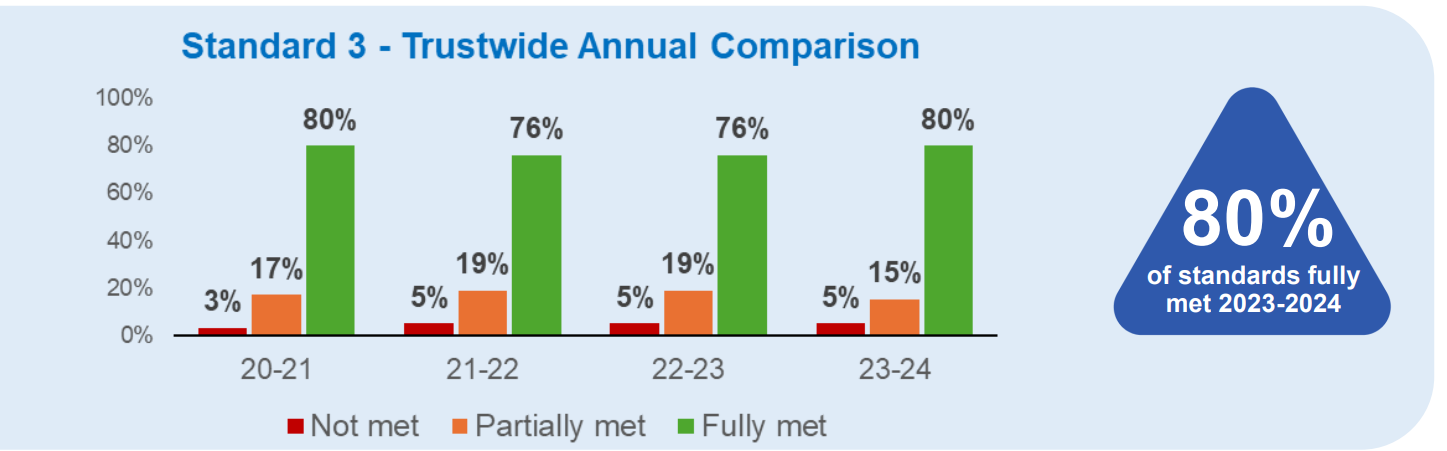
Highlights of Standard 3: Policy and practice protocols re: confidentiality and sharing information are in place.
What is working well
Services are regularly supporting service users to complete recovery plans. In line with National Guidance, CNTW has adopted a new way of recording clinical risk, taking a holistic view of people’s individual risk factors. A key part is the importance of safety plans and encouraging service users to think about what can help manage a crisis, and family and carers should be involved if consent allows.
When entering CNTW services, as part of the assessment process, all service users should be asked if they have any carers involved, and if they are providing consent for information to be shared with them. Self-assessments show the majority of services are regularly doing this, however improvements could be made revising this decision with the service user where consent was not provided.
CNTW has implemented the specific carer record to ensure carer specific information is kept separate to that of the service user, as recommended by the Triangle of Care and Information Governance.
What we are working on
The Triangle of Care recommends that ‘advance statements’ and directives are routinely used, which allow service users (with involvement from carers recommended) to record future care and treatment options. The self-assessments outcomes demonstrate a lack of knowledge and understanding from some staff in relation to advance statements. Advance statements information has therefore been included in the newly updated Carer Awareness Training.
The importance of ‘common-sense confidentiality’ remains a key theme raised by carers. The Carers Together Advisory Group are exploring methods which could increase staff awareness and confidence to ensure that confidentiality is not a barrier when working with families.
“Consent to confidentiality has been really challenging for me in my role as a carer and parent. If staff had adopted the Common-Sense Confidentiality guidelines set out in CNTW’s policies I could have shared invaluable information about my son which would have helped staff to better understand and care for him.” - Carer
Common-sense Confidentiality
When sharing information between service users, carers and staff, the following should
be considered:
- Legal documentation
- Potential risk
- Service user wishes
- Privacy and confidentiality of carers and service users
Even without consent, we can listen to any concerns that you may have. We can share
general information, not specific to the service user/patient about:
- The service
- The diagnosis and how it may present
- How to support the service user/patient, particularly in a crisis
- Medication and possible side effects
- Contact details for local and national support organisations
“I have shared the difficulties I have experienced in relation to staff not implementing Common-Sense Confidentiality through my participation in Involvement Bank opportunities. I hope this will contribute to better outcomes for Service Users and Carers by helping staff to think about good practice.” - Carer
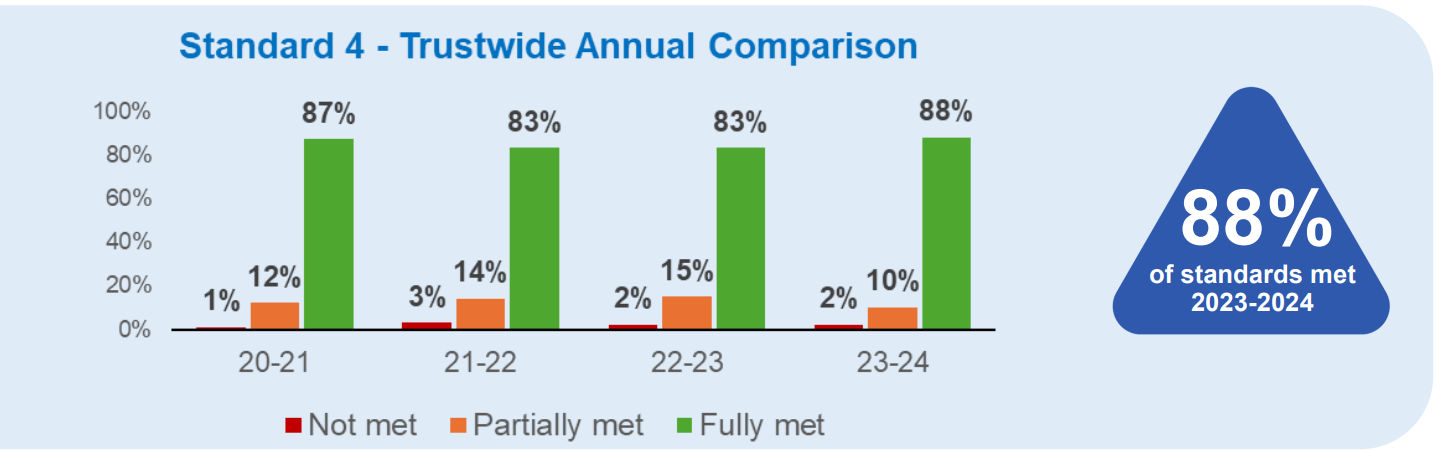
Highlights of Standard 4: Defined post(s) responsible for carers are in place
What is working well
As demonstrated in the self-assessment returns, CNTW has continued to develop and employ people into carer dedicated roles to ensure there is a focus on carer support and wellbeing, it is important to note that carer dedicated roles are not comparative across all services. However, services are continuously looking at how to implement or develop carer dedicated roles specific to their service area.
A Carer Champion is a member of staff who is willing to act as a key contact for carer information for the team where they work. Carer Champions are vital to the successful implementation of the Triangle of Care, sharing good practice and resources within wards, community teams and meetings.
CNTW has two Family Ambassadors. This lived experience role offers emotional and practical support for families of children and young people accessing children and young people inpatient services. This includes General Adolescent Units, Learning Disability Units, Psychiatric Intensive Care Units, Low Secure Units and Medium Secure Units. Feedback highlights how fundamental the role is in decreasing anxiety, providing comfort, and empowering families to speak openly with staff and other families.
Following the conclusion of the NHS England funded pilot, CNTW has confirmed recurrent funding from April 2024 for the two roles.
“The Family Ambassadors supported us from day one, they visited us in our own home and provided us with useful information and leaflets. They explained about the inpatient service which put our minds at ease and shared their own experiences and lived experience which made us feel understood. In meetings they helped us to feel
supported and to speak freely and openly to clinical staff. They contacted professional staff when we couldn’t and supported my entire family including my parents, brothers, sisters and children.” - Parent
The Carer Lead role improves the experience for carers of service users who access CNTW services. This includes practical and emotional support, encouraging the carer to become involved in helping to develop the kind of service they need, right through to training staff and encouraging them to ‘Think Family’ and be carer aware. The role offers a constant presence to remind services of the importance of the voice of the carer.
Involvement Facilitators ensure service users and carers are meaningfully involved in the design, delivery and evaluation of CNTW services. They play a key role in supporting service users and carers to have their voices heard. Involvement Facilitators work closely with services to help embed involvement in a number of ways. This includes the implementation of service user and carer forums and promoting access to the Involvement Bank. They work closely with service users and carers to think of innovative ways to influence service improvement.
Carer Peer Supporters utilise and draw upon their own lived experience in order to share insight and understanding, working exclusively with carers. In addition, they identify and signpost carers to valuable support available within CNTW as well as from external organisations.
Carer Peer Supporters ensure carer support is as accessible as possible, by developing and facilitating carer support groups. They also deliver education sessions to promote their role. A Carer Peer Support Huddle has recently been established where Carer Peer Supporters come together to support each other and share good practice.
“As always so useful. A great way for us to network, talk about issues and problems, and useable solutions. We can update each other on what we’re doing, any new things coming up, or new peers coming in as well as being another chance to just do a wellbeing check in for us.” - Carer Peer Supporter - huddle feedback
What we are working on
Services are planning to increase the number of Carer Champions who have an interest in developing the role and engaging with carers, in addition to their substantive post.
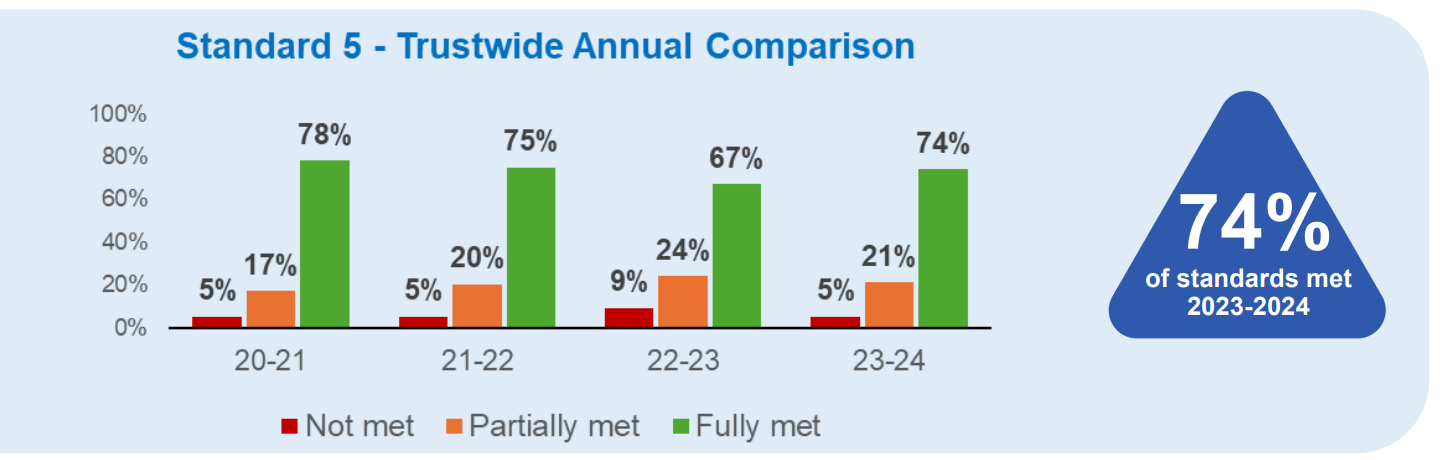
Highlights of Standard 5: A carer introduction to the service is available, with a relevant range of information across the care pathway
What is working well
The 2023 Carer Conference: It’s not rocket science’, and the launch of the co-produced carer resources may have resulted in the increase in some services fully meeting this standard.
Many services have carer display boards, which share information about carer support available from CNTW staff and external partner organisations. Carer Champions often take a lead on keeping these boards up to date and relevant within each service area.
There are a range of carer specific leaflets which are shared with all identified carers. The leaflets inform carers about what to expect from services, where to go for support and the benefits of obtaining a Carer Card.
A newly introduced leaflet was co-produced with carers to provide guidance on how they can best prepare for conversations with the care team.
There was a noticeable difference in self-assessment outcomes between services which had staff in dedicated carer roles and those without. It demonstrates the
importance of having conversations with carers to understand a service user more fully, and that providing resources alone without this personal interaction will not
improve the care being given.
What we are working on
As identified above, more dedicated carer roles need to be considered to increase personal interaction which will provide better outcomes for carers in relation being involved with services.
Services have highlighted the value of leaflets being available in a range of different languages and formats, supporting the cultural and language needs of carers. This is an identified area for further work, as is the importance of linking in with third sector organisations to support this task.
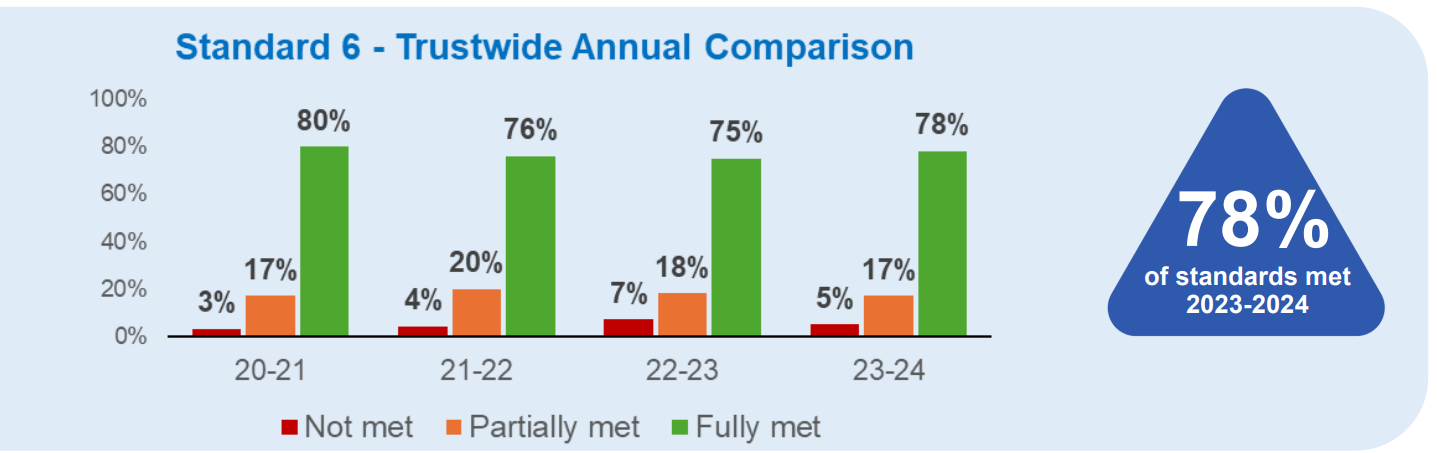
Highlights of Standard 6: A range of carer support services is available
What is working well
- Carer Forums: Listening to carers is important, and there are a number of carer forums across CNTW. It is critical these forums are in place to provide valuable insight from a carers perspective to improve the design and evaluation of services.
- Partnership Working: CNTW signpost and refer carers to Carer Centres. Close working relationships with Recovery Colleges offer carers the opportunity to become involved in courses, wellbeing groups, and meeting like minded people.
- Carer Record: Carers have the right to their own carer record within CNTW. This is not considered to be a service user or mental health record, but offers a safe space for information about a carer to be stored, separate from the records of a service user. This ensures information regarding the carer is stored confidentially and will not be shared with the service user or have a risk of affecting their relationships.
- Getting to Know You as a Carer: The Getting to Know You as a Carer process identifies those that provide a caring role to service users. The information is gathered from meeting with the carer and is a live document, promoting ongoing conversations to further support carers, which can then be recorded within the carers record.
- Staff Carer Support Group: The Staff Carer Support Group brings together staff who are carers themselves. It is an informal, staff-led group, where people can get together to support each other, share information and advice, and look at ways to influence CNTW in ensuring that staff carers are well supported.
What we are working on
CNTW continues to invest in carer specific roles across the Trust, to provide information to carers that they can easily understand about their right to be involved in and make choices about service user and their own needs.
Engagement methods with individuals to learn how involved they are in service use care and how they feel they could become more involved to further develop current roles which better support and involve carers.
Communication is key to making sure carers receive the support they need when they need it. Carers need timely and accurate information about what support is available to them, and who to contact. Development of the carer specific intranet pages to inform staff of current initiatives, best practice models and information to improve the involvement of and offer of support to carers.
Conclusion and future plans
The Care Act 2014 came into force in April 2015, and put in place significant new rights for carers in England including:
- A focus on promoting wellbeing.
- A duty on local councils to prevent, reduce and delay need for support, including the needs of carers.
- A right to a carer’s assessment based on the appearance of need.
- A right for carers’ eligible needs to be met.
- A duty on local councils to provide information and advice to carers in relation to their caring role and their own needs.
- A duty on NHS bodies (NHS England, clinical commissioning groups, NHS trusts and NHS foundation trusts) to co-operate with local authorities in delivering the Care Act functions.
Taken together, these rights should have a significant impact on carers and the support available for carers. However, this is dependent on organisations putting in place practices to appropriately provide these rights. The Triangle of Care provides clear standards to underpin responsibilities under the Care Act implementing a therapeutic relationship between the patient, staff member and carer, which promotes safety and improves the quality of care provided by services. The principles and approach can be used to improve carer-staff engagement in all specialisms wherever interactions take place on the care pathway and save on clinical resource.
This annual Trust wide review and evaluation of clinical service self-assessment tools provides demonstrative evidence of performance and progress, against the six principles and demonstrates CNTW’s continuing commitment to meeting the needs of carers and the importance it places upon achieving the principles of Triangle of Care in all areas. The report also highlights the Trust’s endeavours, in support of the Carers Trust, to instil the ethos of Triangle of Care across the North East and North Cumbria region, in its ambition to develop a regional Carer Passport together with other service providers, through the NENC Regional Triangle of Care Group.
The introduction and promotion of a Carer Card has gone some way to achieving its purpose to support the identification and recognition of carers at the earliest opportunity, and overall organisational performance has improved in all of the six standards since 2023. However performance against Standard 2 remains at an unacceptable level and has again been identified as an area for attention.
Although there is an expectation of improvement following the delivery of promotional plans for the newly co-created Carer Awareness Training programme, meeting performance standards for Triangle of Care is reliant on senior managers and operational services providing the required direction and resource for this undertaking. Care Groups have therefore been asked to consider the delivery of their Carer Awareness Training plan and monitoring process as a priority for the coming year.
There will also be a review of the assurance framework for Triangle of Care to align with the new Care Group organisational structure. This will include consideration of Care Group evaluation of performance against the six principles to inform Triangle of Care performance under the ToC Quality Priority in 2024-2025, and the Triangle of Care Annual Report 2025. The Trust will also explore the possibility of developing a Triangle of Care dashboard.
Carers sit alongside staff as equal partners in Triangle of Care self-assessment performance reviews and the co-creation of this report. The collaborative support from carers and families is greatly appreciated by the Trust.