

Smarter sleep
Sleep is very important for our body and mind. When people do not sleep well, it can affect their physical health and mental health.
Today, many people live busy lives. Society often expects us to be active 24 hours a day. Because of this, it can be harder to get enough good-quality sleep.
When people cannot sleep well, they may have sleep problems. Some people take sleeping tablets (called hypnotics) to help them sleep. These medicines can help in the short term, but they can also cause side effects.
There are many things people can do to improve their sleep without using medication. By learning more about sleep and making small changes to our habits and routines, we can often sleep better.
The Smarter Sleep resources are designed to help patients and healthcare professionals improve sleep in safe and positive ways, without relying on sleeping tablets.
What resources are included?
The Smarter Sleep resources include:
-
Videos about sleep and how to improve it
-
A patient checklist with quick tips to help improve sleep
-
A sleep diary to record sleep patterns
-
A handbook with more information about managing sleep
These resources can help people understand their sleep and take steps to improve it.
This video aims to empower healthcare practitioners to make a difference to patients in their care, using aspects of sleep hygiene and cognitive behavioural therapy for insomnia (CBTi), not just sleeping tablets. Produced by Academic Health Science Network - North East and North Cumbria
A short video which explains Obstructive sleep apnoea (OSA) - produced by Greater Manchester Mental Health Foundation Trust
Are you struggling with sleep?
Before using sleeping tablets have you tired:
| Recording your sleep | Keeping a sleep diary can help you find simple ways to improve sleep |
| Simple lifestyle interventions | Exercise during the day and introduce a screen-free wind-down period before bed |
| Creating an environment right for sleep | A comfortable, calm, cool, quiet, dark room with minimal disruptions is best |
| Reducing caffeine and nicotine intake |
Avoid caffeinated drinks in the evening, and stay below 5 cups/day. Less is best. Decaffeinated coffee still contains caffeine (20% that of a normal coffee) One can of coke contains the same amount of caffeine as an espresso shot Nicotine use shortens total sleep time and makes it harder to fall asleep |
| Reducing alcohol consumption | Alcohol makes it feel easier to get to sleep, but causes poor quality, broken sleep |
| Pharmacist medication review | Some prescribed medicines can make you sleepy during the day or prevent sleep at night. A pharmacist can review timings of medication to help you sleep better |
| Natural light exposure | Sunlight regulates our body clock. Try to spend time outside every single day. Artificial light does not have the same effect as natural light. |
| Setting a regular wake up time, and only going to bed when sleepy | Getting up at the same time each day helps your body clock stay regular, even if you feel tired. Staying in bed when unable to sleep can worsen insomnia. |
Sleeping tablets can aid poor sleep, but long term use causes side effects. They should only be used for a maximum of 2-4 weeks. If you are taking them for longer periods of time, contact your GP.
Sleeping tablets should only be used when absolutely necessary. You should attempt sleep without them wherever possible, to reduce the chance of tolerance and dependence.
Cognitive Behavioural Therapy for insomnia (CBTi) is as effective as sleeping tablets in the short-term, and more effective long-term.
Sleep diary
This sleep diary helps service users and staff understand nightly sleep patterns. It should be completed each morning shortly after waking, when memories of the night are still fresh.
How to complete the diary
Each diary page covers the period from 6pm through to 6pm the following day. Please record:
- When you went to bed
- When you fell asleep
- Times you woke up
- Toilet visits
- Noisy disturbances
- Any caffeine, meals, exercise or medication
- Anything else that may have influenced sleep
Use the comments section to add extra detail about the night.
Symbols used in the sleep diary
↓ – Into bed
↑ – Out of bed
| – Start or end of sleep
— – Time asleep
S – Sleeping pill
C – Caffeinated drink
T – Toilet visit
X – Exercise
N – Noise disturbance
M – Meal
Example sleep chart
The following table shows the 6pm–6pm timeline used in each diary entry. This is a blank example:
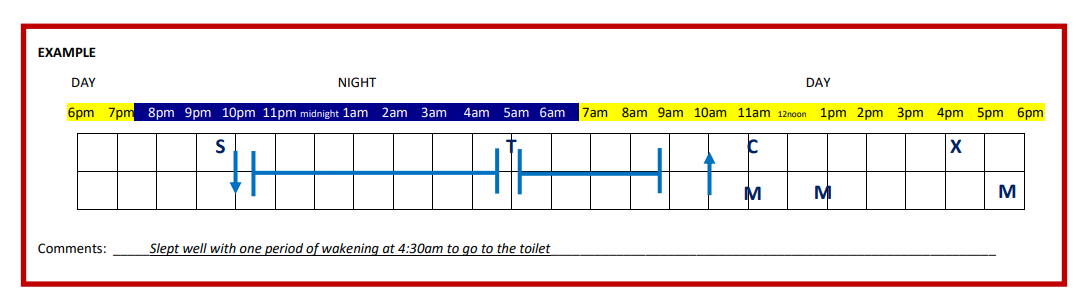
You can mark events using the symbols shown above.
Night sleep diary
The diary includes space to record information for 14 nights. Each night contains:
- A blank grid covering 6pm to 6pm
- Space to record sleep events and relevant symbols
- A comments section for additional notes
| 6pm | 7pm | 8pm | 9pm | 10pm | 11pm | Midnight | 1am | 2am | 3am | 4am | 5am | 6am | 7am | 8am | 9am | 10am | 11am | 12 noon | 1pm | 2pm | 3pm | 4pm | 5pm | |
| Night 1 |
|
|||||||||||||||||||||||
| Night 2 |
|
|||||||||||||||||||||||
| Night 3 |
|
|||||||||||||||||||||||
| Night 4 |
|
|||||||||||||||||||||||
|
Night 5 |
|
|||||||||||||||||||||||
|
Night 6 |
|
|||||||||||||||||||||||
| Night 7 |
|
|||||||||||||||||||||||
|
Night 8 |
|
|||||||||||||||||||||||
| Night 9 |
|
|||||||||||||||||||||||
| Night 10 |
|
|||||||||||||||||||||||
| Night 11 |
|
|||||||||||||||||||||||
| Night 12 |
|
|||||||||||||||||||||||
| Night 13 |
|
|||||||||||||||||||||||
| Night 14 |
|