
CNTW Estates Strategy - Introduction to the Estates Strategy
Introduction
This section provides an overview as to “where are we now” in terms of the clinical services provided by the Trust and an assessment of the current estate. To support this, information including an overview of the services provided, progress made on actions identified in the last Estates Strategy, a detailed assessment of the current estate and a summary identifying future estate development needs will be provided.
A Trust Overview
Services
Cumbria, Northumberland, Tyne and Wear NHS Trust (CNTW) was originally established on 1 April 2006 as following the merger of the former Newcastle, North Tyneside and Northumberland Mental Health NHS Trust; South of Tyne and Wearside Mental Health NHS Trust; and Northgate and Prudhoe NHS Trust, a specialist disability Trust. The Trust became an NHS Foundation Trust on the 1st December 2009. The Trust provides a range of assessment, treatment, recovery / rehabilitation and continuing care services. It also provides some specialist national services and a range of specialist regional services for the North East of England. The geographical coverage is illustrated on the map below with the Trust providing services across Northumberland, North Cumbria and the Tyne and Wear conurbation, a service at Acklam Road in Middlesborough is also operated by the Trust.
The clinical teams are organised into four geographically located Clinical Business Units – North, Central and South, each covering in-patient services, community and access services with additional specialist services distributed across the groups. Below shows how the CBU’s are organised and the services they run:
- IRS/IRT/Crisis Teams
- Addictions
- Liaison
- Primary Care/IAPT
- CMHTs (All ages and specialisms)
- Day Care
- All mainstream inpatient beds - North
- Autism beds
- ECT
- Learning Disabilities and Autism Inpatients
- Northumberland Community Learning Disability Services
- IRS/IRT/Crisis Teams
- Street Triage/136
- Addictions
- Liaison
- Primary Care/IAPT
- CMHTs (All ages and specialisms)
- Day Care
- Adult ADHD
- Diagnostic Services
- All mainstream inpatient beds - Central
- ECT
Secure Services (LD&MH)
Criminal Justice/Court Diversion
Secure Outreach Treatment Team (SOTT)
IRS/IRT/Crisis Teams
Addictions
Liaison
Military Veterans Service
- Primary Care/IAPT
- CMHTs (All ages and specialisms)
- All mainstream inpatient beds - South
- Rose Lodge
- Enhanced Bed Management
- Walkergate Park
- Specialist Mental Health Services
- PD Hub
- Specialist Psychological Therapies
- Spa/Crisis Teams
- 136
- Liaison
- Primary Care/IAPT
- CMHTs (all ages and specialisms)
- Learning Disabilities
- Autism
- Acute Inpatient beds
- Dementia Inpatient Unit
- Learning Disability Inpatient Unit
- Functional Frailty Inpatient Unit
- PICU
- Rehabilitation Unit
- CYPS Inpatient (Alnwood and Ferndene)
- SAMs
- CNDS
- ICTS
- Children's Community Forensics
- Intensive Positive Behaviour Support Team
- EDICT
The majority of corporate services are based at St Nicholas Hospital, including finance, workforce, informatics, and the executive team. It is also a base for the Trusts subsidiary company - NTW Solutions.
The following sections give more detail on the specific services delivered by each CBU:
The services which support Children and Young People include assessment, treatment and ongoing support for those with a range of mental health problems and learning disabilities aged from 0 to 18 years.
The Trust’s services are provided on a community basis (tier 3) and on a specialist basis (tier 4) to all CCG’s within the region and to others across the country on a cost per case basis. The tier 4 provision involves working with children and young people who have highly specific and complex issues requiring intensive outpatient, outreach, day patients and inpatient care.
The Trust’s services also include medium and low secure services for those children and young people who have mental health problems and learning disabilities who are in contact with the criminal justice system or who display serious offending behaviour.
Forensic provision includes the Alnwood and Lennox Units at St Nicholas Hospital which are commissioned via the National Commissioning Group. The Lennox Unit is the only NHS service in the country to offer care to adolescent men with a learning disability in a medium secure environment.
Specialist Adult Services predominantly consists of two specialities – Neurological Services and Secure Care Services.
Neurological Services provides a range of assessment, treatment and rehabilitation interventions on an inpatient, outpatient, day hospital and community basis to patients who have mental health and/or physical health needs. The majority of the inpatient care is provided from Walkergate Park.
The Adult Forensic Services provides a range of assessment, treatment and rehabilitation services at medium and low levels of security. These are supported by community-based services. The patient group comprises individuals with a range of mental disorders including those with learning disabilities, mental illness and personality disorder, and who have committed serious offences or who are at risk of doing so.
In addition to the Neurological Services and Forensic services, hospital-based assessment and treatment services are also provided within specialist care services to adults with a learning disability who have been diagnosed with autistic spectrum disorders who require intensive support, as well as bed-based services for eating and affective disorders.
In-patients
Inpatient Services are covered by each of the four CBU’s and include all in-patient beds with the exception of those listed under specialist services. The services for adults are primarily provided to people aged over 18, who have a range of mental health or LD conditions ranging from moderate to severe, complex and enduring.
The focus of the inpatient and crisis services has been aligned to the continued development of more specialist community-based provision with the aim of reducing reliance on inpatient care, focussing on the development of integrated pathways of care that provide a seamless route to recovery.
To support this, the Trust has invested in the development of facilities for Psychiatric Intensive Care and Section 136 Place of Safety accommodation. A number of quality improvement initiatives have also taken place which involved staff, service users and external organisations. These include work with the Royal College of Psychiatrists programme for the Accreditation of Inpatient Mental Health Services (AIMS).
In-patient Services for older people aim to offer a timely and appropriate admission to hospital for the purpose of assessment and treatment for individuals generally over the age of 65 with a mental health need where such assessment and treatment cannot be managed effectively in the community. Inpatient Services for older people provide specialist mental health assessment and treatment in hospital for two main groups:
- Functional mental health - conditions such as depression, anxiety or psychosis.
- Organic mental health - with progressive conditions such as dementia.
Community services are covered by four CBU’s located across the geographical areas with the community team merged with the access services in the North Cumbria CBU. The community CBU’s incorporate a range of services including IAPT, Primary Care support, Community Mental Health Teams and day care services.
The Community teams operate from a range of premises and in different settings.
The Access services are provided by four CBU’s located across the geographical areas with the access services team merged with the community services in the North Cumbria CBU. The Access CBU’s incorporate a range of services including IRS, IRT, Crisis Teams, Street Triage Section 136 services, addictions services, liasion and Military Veterans services. The aim of the access services is to facilitate access into the services provided by the Trust.
Trust Vision, Values, Quality Goals, and Strategic Ambition
At the time of writing this strategy the Trust is in the process of updating its overarching strategy and this will be known as “We are CNTW”. As such a future revision of the estates strategy may be required in order to reflect any significant changes.
The current strategy was set out in its Caring, discovering, growing: Together, Northumberland, Tyne and Wear NHS Foundation Trust Strategy 2017 – 2022, which set out the vision, values, quality goals and strategic ambition.
The vision set out by the Trust is:
To be a leader in the delivery of high-quality care and a champion for those we serve.
The vision is underpinned by a set of core values and quality goals. The values aim to provide the best care, delivered by the best people, to achieve the best outcomes and the quality goals to help the Trust achieve its vision by providing an overarching framework to its strategy. The three quality priorities for 2022-23 are:
| Quality Domain | Long Term Quality Goals | Annual Quality Priorities |
|---|---|---|
| Safety | Keeping you safe | Improving the inpatient experience |
| Service user and carer experience | Working with you, your carers and your family to support your journey |
Improving waiting times Support service users and carers to be heard |
| Clinical effectiveness | Ensuring the right serviced are in the right place at the right time to meet all your health and wellbeing needs | Equality, Diversity, Inclusion and Human Rights |
The six strategic ambitions of the Trust are:
- Working together with service users and carers we will provide excellent care, supporting people on their personal journey to wellbeing.
- With people, communities and partners, together we will promote prevention, early intervention and resilience.
- Working with partners there will be “no health without mental health” and services will be “joined up”.
- The Trust’s mental health and disability services will be sustainable and deliver real value to the people who use them.
- The Trust will be a centre of excellence for mental health and disability.
- The Trust will be regarded as a great place to work.
Delivery of the previous Estates Strategy
The Trust Board agreed a five-year Estate Strategy which focused on a range of key priorities including:
- Reprovision of facilities to replace poor quality accommodation
- Manage backlog maintenance
- Optimisation of the estate; right size, place, cost effective and meeting user needs
- Ensuring the patient environment is at an acceptable level across the Trust estate.
The above priorities were addressed through a number of projects / initiatives in particular:
- Deliver the PRIDE project, replacing Cherry Knowle and delivery of the Dementia Unit / Older peoples’ re-provision.
- Long Term Low Secure re-provision (Villa 19 Replacement, Northgate Site).
- Alnwood improvements.
- Replace Villa’s 11 and 16 at Northgate with a purpose-built Autism Unit.
- Re-provision of Ward 21 based on the North Tyneside General Hospital site.
- Reduced reliance on in-patient beds.
- Community transformation project.
- Backlog maintenance reduction of £4.2M.
- Asset Realisation £20M.
The following details a selection of some of the key estate developments that have been delivered over the last 10 years and were identified as key developments.
Ferndene, the Trust’s £27 million facility located on the Prudhoe Hospital site combines learning disability and mental health care for children and young people and is the first such integrated service of its kind in the country.
The modern facilities provide accommodation for children and young people from the north east of England and Cumbria.
The unit has 40 beds in four different wards with en-suite facilities. A wide range of therapy, educational, social and recreational facilities are available as well as accommodation for visiting families and office accommodation for staff.
The design of the new unit was developed in conjunction with the young patients with regular meetings with staff, the architects and construction partners throughout the process.
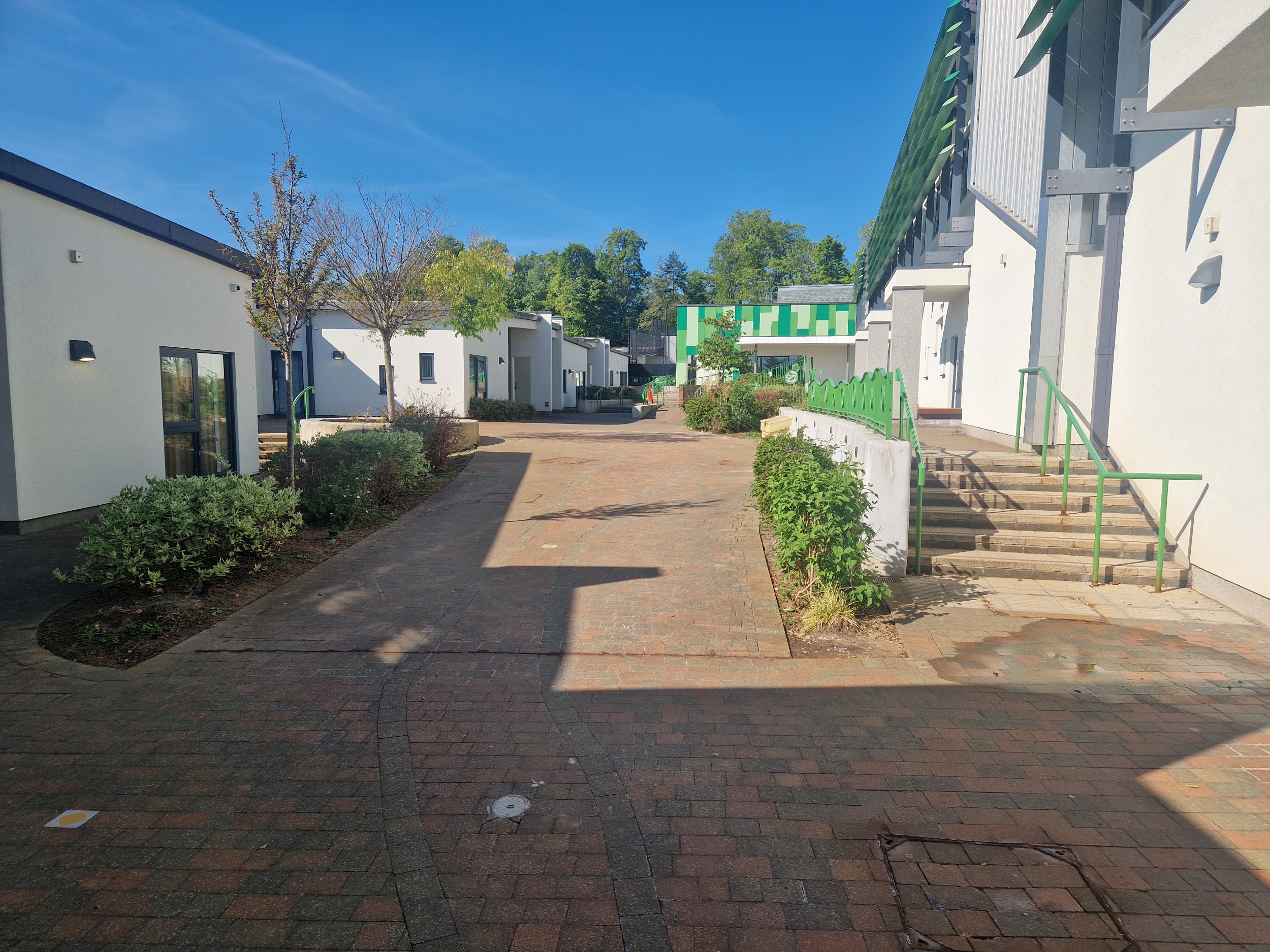
Hopewood Park, opened in 2014, is an assessment and treatment centre providing adult psychiatric intensive care. The hospital also delivers a ‘moving on’ service for people with complex care needs who require short term intensive rehabilitation.
As well as providing inpatient and community care the hospital is also home to the Street Triage team which is delivered in partnership with Northumbria Police, a carers’ information hub, and the Initial Response Service for Sunderland and the South of Tyne.
Service users and their carers are supported by around 390 staff working in nursing, occupational therapy, peer support, catering and in community service.
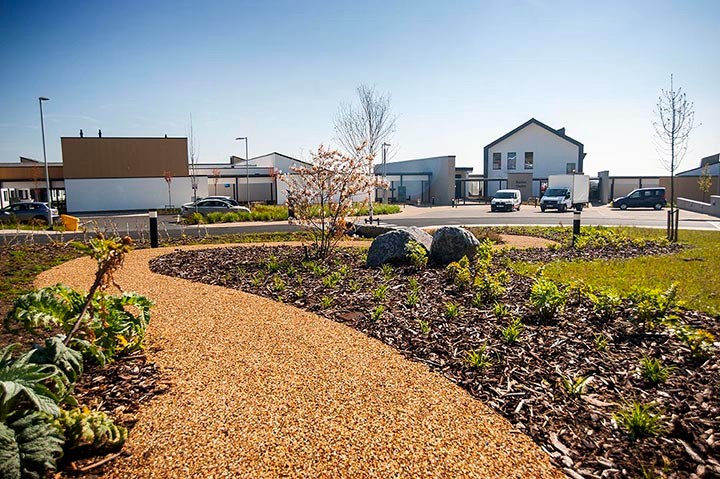
The Tyne Unit, on Northgate Hospital site in Morpeth is a 24-bed ward which provides locked forensic rehabilitation services exclusively for male patients over 40 years old with learning disabilities.
The ward is split into four flats, each with six en-suite bedrooms, a living room, dining area, training kitchen, treatment rooms and also group and activity rooms.
Tyne Unit forms part of the wider forensic Learning Disability service and provides specialist multidisciplinary care and treatment for men who are vulnerable and or at risk to themselves or others, and offers a comprehensive treatment programme, incorporating a wide range of needs based individual and group treatments.
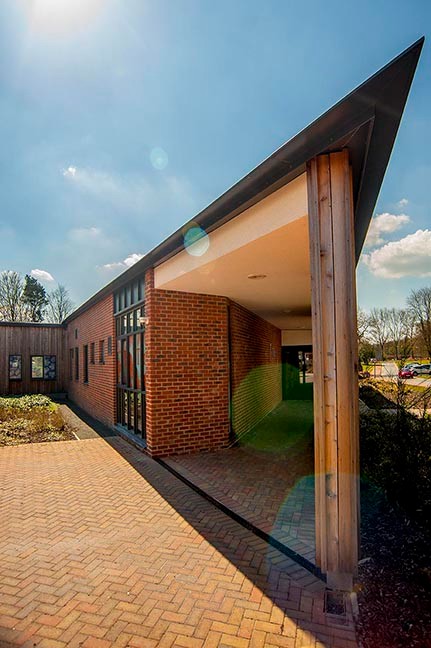
Mitford Unit on the Northgate site was opened to patients in November 2016. The unit is tailored specifically to be as welcoming as possible to adults with an autism spectrum disorder. It is a bespoke centre designed in partnership with service users, families, and NHS staff to offer time limited support at times of mental ill health.
The unit provides highly personalised inpatient care, should it be needed. At Mitford’s centre is a concentrated focus on working together with service users, families and carers.
Areas such as the sensory room, activity room and even the corridors, have all been designed to reduce anxiety and support patients. Specialist features include:
- Curved walls and seating areas and doors and cupboards that can be hidden into walls to create smooth lines and reduce anxiety.
- Precise temperature and lighting controls for each living area to adjust the environment depending on patients’ needs.
- Sound-proofing throughout the unit to help reduce noise sensitivity.
- High ceilings and windows to maximize natural light.
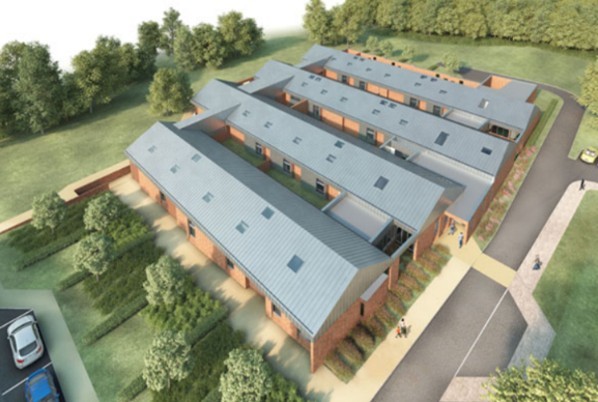
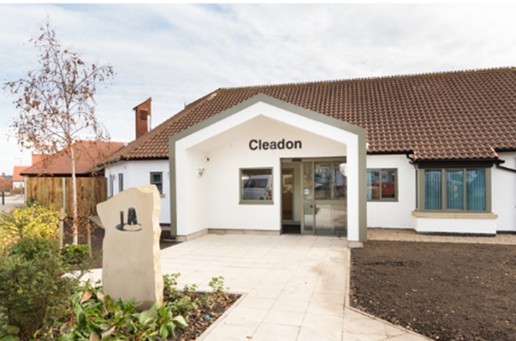
Cleadon Ward is an 18-bed assessment and treatment unit providing modern purpose-built accommodation for older people who primarily are experiencing mental health issues but also have physical frailty.
The unit is part of the specialist Older Persons Centre working alongside the dementia units of Mowbray and Roker Ward, and the challenging behaviour unit of Marsden.
The bedrooms provide a safe environment for patients encouraging the healing process for people who are physically frail. The attractive outdoor courtyard offers patients the opportunity to indulge in a passion for gardening by tending to the raised flower beds.
The unit features artwork which was developed with the involvement of staff and patients. It provides a welcoming and pleasant environment and features a number of bespoke art installations such as artwork windows and wall papers featuring local landmarks.
The Current Estate
The Estate covers a large geographical area of over 4800 square miles with an estate portfolio comprising over 260 buildings spread across 9 principal sites and 74 satellite locations. Our services are provided from a wide range of settings, including in-patient sites, community premises, health centres and clinics as well as patient homes.
Properties range in age from the 1870’s to the present day and ownership of these properties is mixed, with the Trust occupying space owned or leased by a number of organisations including:
- PFI
- NHS Property Services Ltd
- Local Authorities
- General Practitioners (GPs); and
- Private landlords.
The following sections provide a detailed overview of this information so that a clearer understanding of the estate and its benefits and shortfalls can be put into context. The information will then be used to underpin the estates strategy as it will help to inform the organisation as to where the priorities for development should be.
Locations and Principal Site Information
The geographical area covered for the both the principal hospital sites and others where inpatient accommodation is provided are shown in figures 4 below:
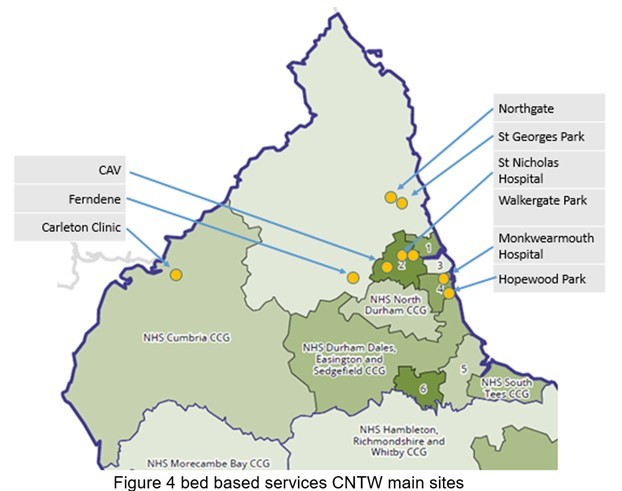
The principal hospital sites account for the majority of the inpatient beds managed by the Trust, with the remaining inpatient services being provided in the six stand-alone units whose locations are shown in the figure above.
A summary of the services provided from each site is detailed in the sections below, a full property schedule and location plan is contained in Appendix 1.
Northgate Hospital is situated on the outskirts of Morpeth in Northumberland set in approximately 28 hectares of land. Over the last 20 years the site has seen significant change with several villas demolished and in 2015 a substantial part of the site was sold to Taylor Wimpey for housing development.
The site currently provides a range of clinical services including Medium and Low Secure, Mental Health, Autism Services, Assessment and Treatment for Patients with Learning Disabilities, Adult Forensic Medium and Low Secure.
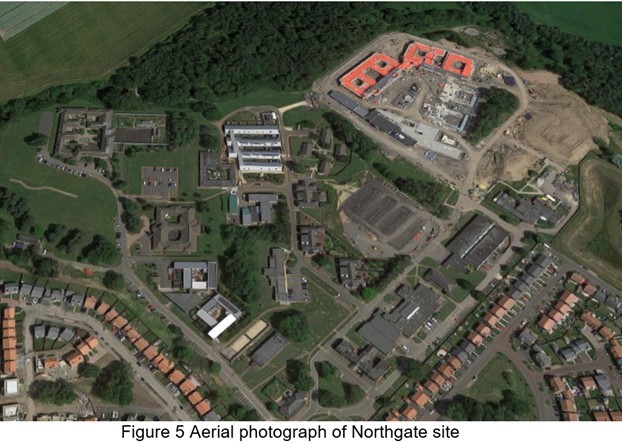
The photograph shows an aerial view of the current site. The site is currently reaching the end of a major redevelopment which will see the consolidation of adult forensic in-patient services onto the site and will also result in a further land sale.
The following summarises the current estate at Northgate:
- The elements of the CEDAR program on this site are currently under construction and will be completed in March 2023.
- The Tweed Unit does not provide the same standard of accommodation as other areas across the Trust, areas of deficiency include no en-suite facilities, poor outdoor space.
- The high level of backlog maintenance associated with numerous buildings across the site will be addressed as part of the identified land sale.
- The area for land sale which has been incorporated into the CEDAR project.
St George’s Park consists of in-patient facilities built via the PFI initiative on part of the former St George’s Hospital site in Morpeth and opened in 2006. The layout of the site consists of central in-patient facilities with additional detached villa type accommodation within a village complex. The concession period is 30 years inclusive of construction, at the end of which, the facility transfers to the ownership of the Trust.
The site provides a range of clinical services which includes:
- Adult Urgent Care and Rehabilitation,
- Mother and Baby Unit,
- Older People’s Functional, Organic and Specialist Long Term Care beds.
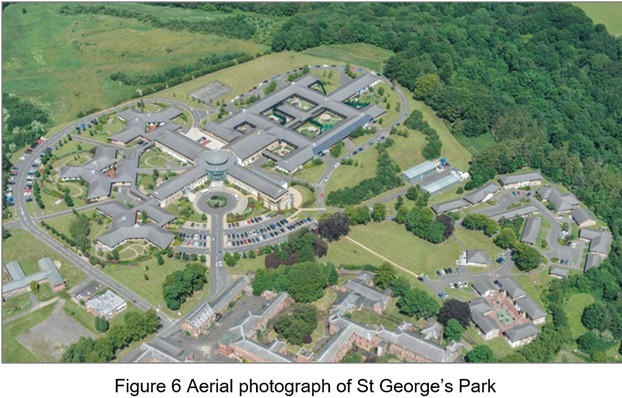
The following summarises the current estate at St George’s:
- The condition, quality and functional suitability are all rated as good.
- Significant additional investment has been made on the acute wards in the last 5 years to improve safety, security and resilience.
- One of the elderly wards remains vacant.
- Space utilisation in the offices on the first floor is in parts considered low.
- A parcel of land to the north of the site is currently in the process of being sold.
- The acuity of patients in the Village is increasing and plans are being considered to move them into the empty Druridge ward - this would then present an issue with the Village which could be used for a range of purposes or disposed of.
St Nicholas Hospital site is situated in the centre of Gosforth, Newcastle. The site comprises 12 hectares of land with mainly refurbished Victorian style buildings (66%), some newer facilities being constructed in the last 15 years (20%) and a number of other buildings of varying ages located across the site. The site provides a range of clinical services (approximately 100 beds), including Adult Forensic Medium and Low Secure, a PICU and Children and Young People’s Medium Secure units. In addition to clinical services, the majority of corporate services for the Trust are also provided from this site. The majority of the site is subject to a conservation order through the local Planning and Development Framework.
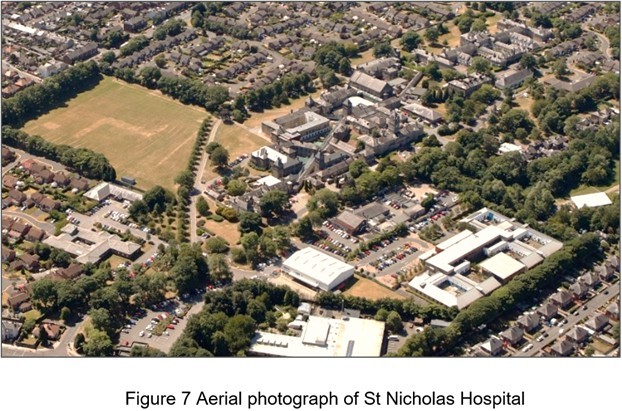
The following key issues are associated with the current estate at St Nicholas Hospital:
- The Alnwood Unit is not considered functionally suitable. Its replacement is included as part of the CEDAR program, and they will be moving to Ferndene in 2022.
- There are a number of buildings across the site with vacant space and the move from Alnwood will create additional space.
- There is some high level of backlog maintenance associated with a small number of buildings and services.
- The site performs poorly in relation to energy consumption.
- Bamburgh Clinic forms part of the CEDAR program and the Forensic services will relocate to Northgate in 2023, the building will then be extended and modified to facilitate the transfer of Adult acute in-patients currently located on the Hadrian Clinic.
- Historically car parking has presented a significant challenge for this site and would impede any significant expansion of services. The COVID pandemic has seen a significant reduction in car parking demand and this probably reflects the higher proportion of corporate staff on this site working from home.
The Trust occupies a number of wards on the Campus for Ageing and Vitality site. These include three adult assessment and treatment wards (54 beds) located in the Hadrian Clinic building.
The Trust also currently provides assessment, treatment and rehabilitation for functional and organic disorders for older peoples services for Newcastle from two wards in the Centre for the Health of the Elderly (20 beds).
The figure below shows an aerial view of the site including the Hadrian Clinic and the Centre for the Health of the Elderly building.
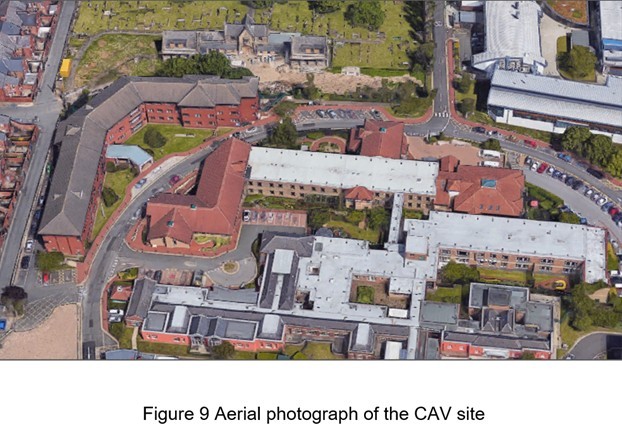
The following key issues are associated with the current estate at the CAV site
- The condition, quality and functional suitability is generally poor, although a partial upgrade was undertaken in the in-patient areas of Hadrian Clinic
- Buildings are not owned by CNTW and there is limited opportunity to bring them up to a standard enjoyed elsewhere in the Trust
- NuTH has sold the site to Newcastle University and there now exists a lease between NuTH and the University, with CNTW having a sub lease. This lease will terminate in 2024.
- There is currently no agreed solution for the reprovision of Castleside which is an organic old age psychiatry ward or Akenside which treats inpatients with functional mental health problems. A business case will be prepated in early 2023 to set out the options for the OPS reprovision.
- The in-patient services in Hadrian Clinic will move to Bamburgh Clinic on the St Nicholas site as part of the CEDAR program.
Walkergate Park consists of an in-patient facility built via PFI on part of the Walkergate Hospital site in the east end of Newcastle, opened in 2007. The facility consists of Neuroligical Services inpatient facilities for 65 patients with an outpatients department. There is also a North East drive mobility – a 200m specialist driving track for mobility assessments.
This is a PFI site with a concession period of 32 years inclusive of construction, at the end of which, the facility transfers to the ownership of the Trust.
At the North end of the site there is a 2-storey office building, Benfield House, which is owned and used by the Trust. There is also an adjacent single storey building, which was leased to IBM but is now vacant.
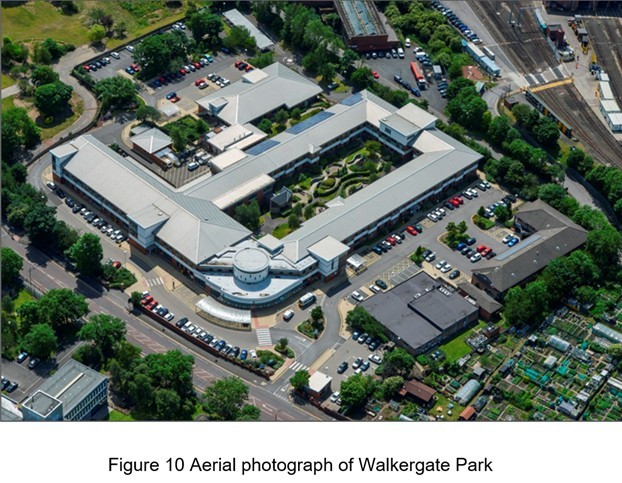
The following key issues are associated with the current estate at Walkergate Park:
- The condition, quality and functional suitability are all rated as high
- The former IBM building is vacant.
Hopewood Park is an assessment and treatment centre providing psychiatric intensive care. The hospital also delivers a ‘moving on’ service for people with complex care needs who require short term intensive rehabilitation.
As well as providing inpatient and community care the hospital is also home to the Street Triage team which is delivered in partnership with Northumbria Police, a carers’ information hub, and the Initial Response Service for Sunderland and the South of Tyne.
The new hospital opened in September 2014 on the site of the former Ryhope General Hospital and replaced the majority of the Trust’s Cherry Knowle Hospital and the mental health wards in South Tyneside General Hospital.
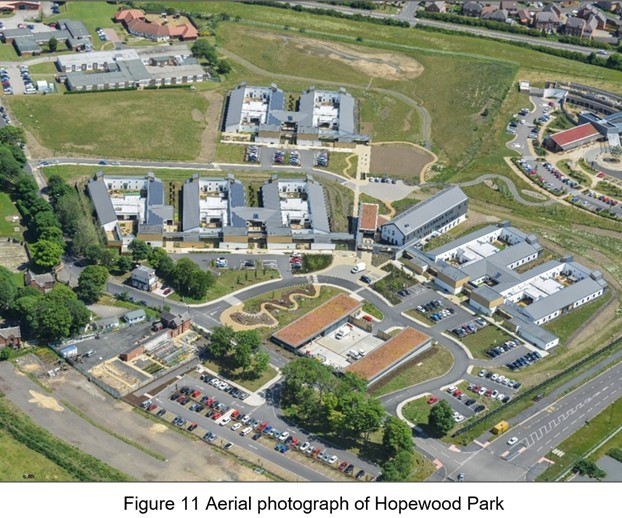
The following key issues are associated with the current estate at Hopewood Park:
- The condition, quality and functional suitability are all rated as high across the new build facilities
- Meadow View is identified as a decant emergency ward, however this ward has significant limitations in terms of of its condition, safety and functional suitability for a range of clinical in-patient service.
- Wellfield Day unit has moderately high levels of backlog maintenance issues.
Monkwearmouth Hospital is situated on the northern outskirts of Sunderland. The site provides a range of clinical services (approximately 40 beds), which include, Adult Learning Disability Services, Older People’s Continuing Care Services, Adult Rehabilitation Services, CABIS, North Team Community facilities and CYPS community facility.
The figure below shows an aerial view of the site; however, it should be noted that since this photograph was taken the demolition and reprovision of the main block has begun.
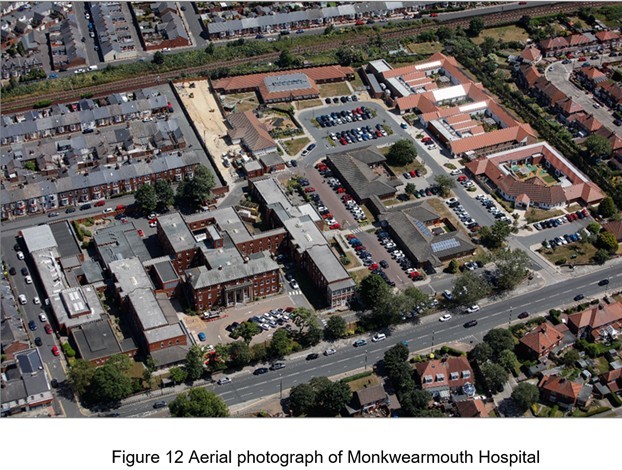
The following key issues are associated with the current estate at Monkwearmouth Hospital:
- The condition, quality and functional suitability are all rated as high across the new build in patient facilities of Roker, Mowbray and Cleadon.
- Marsden ward is currently being used as decant space and not for in-patients.
- Blocks 1,2, 5 & 6 have been demolished, and a new build will be constructed along with a replacement car park.
Carleton Clinic is located to the South of Carlisle and prvides a range of mental health facilities including acute adult admission/treatment, Psychiatric intensive care, wards for older people, wards for people with learning disabilities or autism, community services and crisis services. The site forms part of the transfer of services from the former Cumbria Partnerships Foundation Trust into NTW at the time of the creation of CNTW in 2019.
The original site formed part of a land sale agreement with Taylor Wimpey and sections have been developed for housing.
The figure below shows an aerial view of the site.
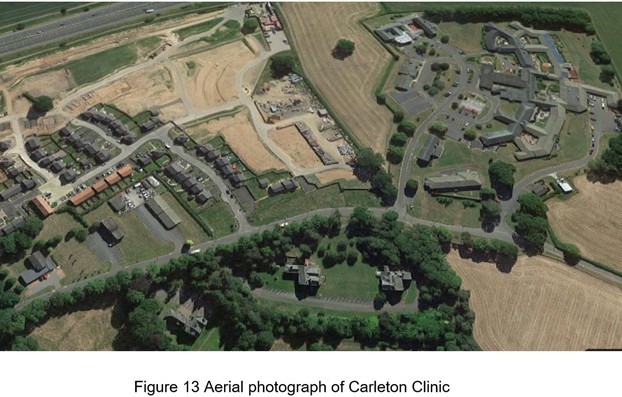
The following key issues are associated with the current estate at Carleton Clinic
- The condition, quality and functional suitability are mixed.
- Hadrian ward is undergoing a refurbishment.
- Acorn ward is to be converted into a crisis centre.
- The site is fragmented with some buildings separated from the main site by a new housing estate.
- There is a parcel of land circa 4 acres to the North of the main site which could be utilised in the future.
Other In-patient Sites
In addition to the principal sites, in-patient services are provided across the organisation in a number of other locations, these are detailed in the table 3 below.
| Site name | CBU | Speciality | Comments |
|---|---|---|---|
|
Lotus Ward, Acklam Road, Middlesborough |
North Cumbria Locality Care Group |
10 bed Children & Young People |
Good quality accommodation on a non CNTW site. Ward was upgraded for commencement of service in 2021 |
|
Brooke House Houghton |
Inpatients South |
10 bed, Rehab and Continuing Care |
CNTW owned Community facility |
|
Elm House, Gateshead |
Inpatients Central |
14 bed Rehab and Continuing Care |
CNTW Leased Community facility |
|
Rose Lodge Hebburn |
Inpatients South |
10 bed, learning Disability Inpatient |
CNTW facility. Service have indicated a rationale to operate the service from a main hospital site due to operation as an isolated service. |
|
Ward 31a, based at RVI in Newcastle. |
Neurological and Specialist Services |
5 bed, eating disorders |
Suggestions continue to circulate that NuTH require this space to be used for their clinical services. |
|
Yewdale Ward, West Cumberland Infirmary, |
Inpatients Cumbria |
16 bed, acute urgent care in-patients |
An isolated service. Historically quality and fuctional suitability have been poor. Recent investment has remedied some of the deficiencies. |
Table 3 No main site bed based services
Other Sites
The Trust utilise a number of other buildings located across the North East of England and North Cumbria. These buildings have a mix of tenures including owned, leased, occupied under licence, service level agreements and other informal agreements. These buildings represent a significant part of the estate and a detailed summary of them is shown in Appendix 1.
Current Assessment of the Estate
An analysis of the existing estate has been undertaken using assessment criteria commonly used for NHS buildings, this will include an age profile, occupancy costs, physical condition, space utilisation, quality assessment, functional suitability, compliance with statutory requirements, backlog maintenance position and environmental management.
Age Profile
The age profile of the estate has changed over the last few years following a programme of replacing outdated and unsuitable accommodation with modern purpose-built facilities. The main changes have occurred because of the replacement of large sections of estate on the Cherry Knowle and Prudhoe sites which predated 1948. Table 4 below shows the how the % distribution has changed over the last 11 years.
CNTW Age Profile of Estate
| Period | 2012 | 2018 | 2023 |
|---|---|---|---|
| Pre 1948 | 30% |
24% |
24% |
| 1948 - 74 | 18% | 11% | 14% |
| 1975-2005 | 24% | 23% | 24% |
| Post 2005 | 28% | 42% | 38% |
Table 4 Age Profile Change over time
The age profile reflects the sustained development in new facilities that has been delivered by the Trust. This strategy has resulted in facilities that are not only fit for purpose and are of a high quality, but they also have addressed many of the shortcomings associated with the older estate which could not be resolved economically or practically, for example first floor inpatient accommodation and lack of en-suite facilities.
The profile reflects the estate that was transferred from North Cumbria in 2019 and also the changes on the Northgate site which are due to be handed over in the early part of 2023.
Bed Numbers
The figures below show the overall available bed provision across each of the principal and community sites and the the change over the last 11 years. The figure clearly shows how numbers have reduced since the previous Estates Strategy in 2012, with the most significant change being the reduction in social and residential beds. This bed reduction is reflective of the Trusts operational strategy to reduce in-patient beds and provide treatment in community or other settings. Table 5 below shows the bed number change over the last 11 years.
CNTW Inpatient Beds
| Period | 2012 | 2018 | 2023 |
|---|---|---|---|
| Beds | 1305 | 857 | 791 |
Table 5 Bed number change over time
Tenure
Whilst the Trust owns the majority of its main sites (either freehold or through the PFI Project Agreements), there remains a significant number of buildings which the Trust occupies under either lease, licence, informal tenancy or service level agreements. The breakdown of tenure is shown in table 6 below.
| Tenure | No of sites | Floor area m2 |
|---|---|---|
| Freehold | 46 | 114521 |
| PFI | 2 | 28988 |
| Lease | 53 | 20610 |
|
SLA / Informal tenancy / |
13 | 10038 |
| Total | 114 | 174157 |
Table 6 Number of sites and Tenure
Estates Occupancy Costs
For the main sites a summary of the principal elements of expenditure is shown in table 7 below and this is then shown as a £/m2 for illustrative purposes. The figures illustrate the range of estates costs necessary to provide accommodation on main hospital sites. Several factors contribute to the wide variation in costs which makes a direct comparison of value for money difficult to calculate.
The overall site costs show that the two PFI sites have the highest costs per occupied floor area, this makes it imperative that space utilisation of those sites is maximised as there is no scope to reduce costs by mothballing space.
| Site | CAP Charges PFI £000 |
Rent / Rates £000 |
Utilities £000 |
Maintenance / Other £000 |
Total | Floor area m2 |
£000/m2 |
|---|---|---|---|---|---|---|---|
| Northgate | 862 | 87 | 372 | 1228 | 2549 | 19,692 | 129 |
| SGP | 3613 | 216 | 345 | 1658 | 5832 | 19,353 | 301 |
| Ferndene | 214 | 54 | 136 | 512 | 916 | 5,374 | 170 |
| SNH | 1049 | 186 | 669 | 2128 | 4032 | 31,813 | 127 |
| WGP | 2025 | 138 | 222 | 1051 | 3436 | 12,661 | 271 |
| CAV | 496 | 65 | Incl | 79 | 640 | 6,296 | 102 |
| MWH | 433 | 216 | 227 | 1345 | 2221 | 13,466 | 165 |
| HWP | 1259 | 412 | 389 | 1296 | 3356 | 16,692 | 201 |
| Rose Lodge | 38 | 22 | 26 | 52 | 138 | 1,252 | 110 |
| Carleton Clinic | 311 | 114 | 356 | 612 | 1393 | 11,237 | 124 |
Table 7 Principal Elements of Expenditure
Six Facet Survey and Backlog Maintenance
This section details the condition of the estate which has been assessed using the Department of Health's ‘Risk Based Methodology for Establishing and Managing Backlog’, to create a series of detailed six facet surveys.
This enables an assessment of the Trusts current estate with regard to fitness for purpose in terms of use, condition and compliance. The six facets which are assessed and ranked are:
- Physical Condition
- Fire, Health and Safety
- Quality
- Space Utilisation
- Functional Suitability
- Environmental Planning
Following site surveys and desk top reviews, the appropriate scores are made against each building for the various elements. Tables 8 – 19 below detail the scores for each of the facets followed, showing the overall total followed by the main sites and a summary of the smaller sites. This is followed by a summary of the key findings.
All sites
| Facet | % Ranking | % Ranking | % Ranking | % Ranking |
|---|---|---|---|---|
|
A |
B |
C |
D |
|
| Physical condition |
7.5 |
81.5 |
10.7 |
0.3 |
| Quality |
5.9 |
83.2 |
10.9 |
0 |
| Functional suitability |
25.5 |
63.7 |
10.8 |
0 |
| Fire, health and safety |
23 |
75.5 |
1.5 |
0 |
| Environmental management |
0 |
60.5 |
36.6 |
2.7 |
|
Full |
Underused |
Overcrowded |
Empty |
|
| Space Utilisation |
85.8 |
9.4 |
0.8 |
4.1 |
Table 8 Facet Surveys
Northgate Hospital (Post - MSU Development)
| Facet | % Ranking | % Ranking | % Ranking | % Ranking |
|---|---|---|---|---|
|
A |
B |
C |
D |
|
| Physical condition |
64.4 |
35.4 |
0 |
0 |
| Quality |
43.8 |
50.1 |
6.1 |
0 |
| Functional suitability |
56.4 |
43.6 |
0 |
0 |
| Fire, health and safety |
33.3 |
66.7 |
0 |
0 |
| Environmental management |
0 |
77.5 |
22.5 |
0 |
|
Full |
Underused |
Overcrowded |
Empty |
|
| Space Utilisation |
90.7 |
5.2 |
0 |
4.1 |
Table 9 Facet Surveys
Ferndene
| Facet | % Ranking | % Ranking | % Ranking | % Ranking |
|---|---|---|---|---|
|
A |
B |
C |
D |
|
| Physical condition |
0 |
100 |
0 |
0 |
| Quality |
0 |
100 |
0 |
0 |
| Functional suitability |
0 |
100 |
0 |
0 |
| Fire, health and safety |
0 |
100 |
0 |
0 |
| Environmental management |
0 |
100 |
0 |
0 |
|
Full |
Underused |
Overcrowded |
Empty |
|
| Space Utilisation |
73.9 |
0 |
0 |
26.1 |
Table 10 Facet Surveys
St Nicholas Hospital
| Facet | % Ranking | % Ranking | % Ranking | % Ranking |
|---|---|---|---|---|
|
A |
B |
C |
D |
|
| Physical condition |
0 |
86.5 |
13.5 |
0 |
| Quality |
0 |
90.8 |
9.2 |
0 |
| Functional suitability |
0 |
98.5 |
1.5 |
0 |
| Fire, health and safety |
21.3 |
74.7 |
4 |
0 |
| Environmental management |
0 |
96 |
4 |
|
|
Full |
Underused |
Overcrowded |
Empty |
|
| Space Utilisation |
77.5 |
21.4 |
0 |
1.1 |
Table 11 Facet Surveys
Walkergate Park
| Facet | % Ranking | % Ranking | % Ranking | % Ranking |
|---|---|---|---|---|
|
A |
B |
C |
D |
|
| Physical condition |
0 |
93.6 |
6.4 |
0 |
| Quality |
0 |
100 |
0 |
0 |
| Functional suitability |
89 |
11 |
0 |
0 |
| Fire, health and safety |
89 |
11 |
0 |
0 |
| Environmental management |
0 |
100 |
0 |
0 |
|
Full |
Underused |
Overcrowded |
Empty |
|
| Space Utilisation |
94 |
0 |
0 |
6 |
Table 12 Facet Surveys
Hopewood Park
| Facet | % Ranking | % Ranking | % Ranking | % Ranking |
|---|---|---|---|---|
|
A |
B |
C |
D |
|
| Physical condition |
0 |
86.5 |
13.5 |
0 |
| Quality |
0 |
88.2 |
11.8 |
0 |
| Functional suitability |
0 |
92.6 |
7.4 |
0 |
| Fire, health and safety |
58.3 |
41.7 |
0 |
0 |
| Environmental management |
0 |
69.4 |
30.6 |
|
|
Full |
Underused |
Overcrowded |
Empty |
|
| Space Utilisation |
88.2 |
7.4 |
0 |
4.5 |
Table 13 Facet Surveys
Monkwearmouth Hospital
| Facet | % Ranking | % Ranking | % Ranking | % Ranking |
|---|---|---|---|---|
|
A |
B |
C |
D |
|
| Physical condition |
0 |
93.6 |
6.4 |
0 |
| Quality |
0 |
70.5 |
29.5 |
0 |
| Functional suitability |
0 |
100 |
0 |
0 |
| Fire, health and safety |
0 |
92.3 |
7.7 |
0 |
| Environmental management |
0 |
0 |
100 |
0 |
|
Full |
Underused |
Overcrowded |
Empty |
|
| Space Utilisation |
87.9 |
12.1 |
0 |
0 |
Table 14 Facet Surveys
St George's Park
| Facet | % Ranking | % Ranking | % Ranking | % Ranking |
|---|---|---|---|---|
|
A |
B |
C |
D |
|
| Physical condition |
0 |
100 |
0 |
0 |
| Quality |
0 |
100 |
0 |
0 |
| Functional suitability |
100 |
0 |
0 |
0 |
| Fire, health and safety |
0 |
100 |
0 |
0 |
| Environmental management |
0 |
100 |
0 |
0 |
|
Full |
Underused |
Overcrowded |
Empty |
|
| Space Utilisation |
99.1 |
0.9 |
0 |
0 |
Table 15 Facet Surveys
Campus for Ageing and Vitality
| Facet | % Ranking | % Ranking | % Ranking | % Ranking |
|---|---|---|---|---|
|
A |
B |
C |
D |
|
| Physical condition |
0 |
60.8 |
39.2 |
0 |
| Quality |
0 |
60.8 |
39.2 |
0 |
| Functional suitability |
0 |
100 |
0 |
0 |
| Fire, health and safety |
0.6 |
99.4 |
0 |
0 |
| Environmental management |
0 |
0 |
100 |
0 |
|
Full |
Underused |
Overcrowded |
Empty |
|
| Space Utilisation |
100 |
0 |
0 |
0 |
Table 16 Facet Surveys
Community
| Facet | % Ranking | % Ranking | % Ranking | % Ranking |
|---|---|---|---|---|
|
A |
B |
C |
D |
|
| Physical condition |
8.9 |
82.1 |
7.2 |
1.8 |
| Quality |
8.1 |
84.4 |
7.5 |
0 |
| Functional suitability |
11.1 |
82.7 |
6.2 |
0 |
| Fire, health and safety |
19.6 |
78.8 |
1.7 |
0 |
| Environmental management |
0 |
21.8 |
63.4 |
0 |
|
Full |
Underused |
Overcrowded |
Empty |
|
|
Space Utilisation |
80.3 |
0 |
19.7 |
0 |
|
Space Utilisation (Ex Wards) |
77.4 |
10.9 |
0 |
11.7 |
Table 17 Facet Surveys
Carleton Clinic
| Facet | % Ranking | % Ranking | % Ranking | % Ranking |
|---|---|---|---|---|
|
A |
B |
C |
D |
|
| Physical condition |
0 |
79.4 |
20.6 |
0 |
| Quality |
0 |
80.3 |
19.7 |
0 |
| Functional suitability |
0 |
100 |
0 |
0 |
| Fire, health and safety |
0 |
100 |
0 |
0 |
| Environmental management |
0 |
0 |
100 |
0 |
|
Full |
Underused |
Overcrowded |
Empty |
|
|
Space Utilisation |
96.1 |
3.9 |
0 |
0 |
Table 18 Facet Surveys
West Cumberland Hospital
| Facet | % Ranking | % Ranking | % Ranking | % Ranking |
|---|---|---|---|---|
|
A |
B |
C |
D |
|
| Physical condition |
0 |
66.8 |
33.2 |
0 |
| Quality |
0 |
67.6 |
32.4 |
0 |
| Functional suitability |
0 |
67.6 |
32.4 |
0 |
| Fire, health and safety |
0 |
100 |
0 |
0 |
| Environmental management |
0 |
60.5 |
36.7 |
2.8 |
|
Full |
Underused |
Overcrowded |
Empty |
|
|
Space Utilisation |
100 |
0 |
0 |
0 |
Table 19 Facet Surveys
Key factors identified in the analysis are:
11% of building stock required improving to bring the buildings up to a minimum condition of category B - this includes the building, electrical and mechanical components of a building and site wide infrastructure - elements falling into those categories consist of structure, roofs, drainage, sewerage, roads and footpaths, boiler plant, steam systems, hot and cold water systems, lifts, electrical systems, fire alarms, telephony and building management systems.
12% of the Trusts estate is below the quality standard which the Trust would wish to attain identifying problems with the aesthetic and environmental conditions of the building. Criteria used to assess the quality include is it an attractive and pleasing area for patients and staff, is it well lit, heated and cooled, is it noise and odour free and attractively designed with good colour schemes and well furnished.
5% of the overall estate is considered to be functionally unsuitable for its purpose - this includes in-patient environments that do not allow for easy operation of the ward and do not have the interactive space to deliver therapeutic activities, day space needs, external space and support the privacy and dignity agenda for patients. For non in patient environments this is in relation to the ability of a building to effectively support the function being carried out in the building.
1.5% of the estate does not meet statutory and non statutory compliance including fire – this includes some elements associated with DDA compliance, asbestos, site security and aging fire systems. In addition to the building elements of health and safety, the NTWS Estates team have been working with the Trust safety team to establish areas where safety improvements can be made to in-patient environments, these improvements are not captured in this facet however they are identified in Section 5.
This facet explores how well space is being used across location and time. To gain a more acurate understanding of space utlisation, properties are subject to on-going surveys using Occupeye, a mobile sensor-based system located in rooms. The sensors allow a real time analysis of occupancy, and the information is used to suggest ways of using space more effectively and therefore save money. The information captured by Occupeye is revealing that space in some locations is significantly underutilised. Based on the Occupeye data and checks by the Property Team, 14% of the estate is not being optimised for space utilisation.
The COVID pandemic has had a significant impact on the utilisation of the estate in terms of space utilisation, in particular for corporate teams. Some staff are able to work from home and the demand for meeting space has dropped due to many meetings using TEAMS on-line technology, the full impact of these changes on future estate is not fully understood.
Historically this facet has been measured against energy consumption / heated volume and the majority of our estate would achieve an “A” category as performance is less than 55GJ/100m3. For this assessment, the sustainability and energy management facet has taken into account a variety of factors including, energy and water consumption performance indicators, % of renewable technologies, carbon emissions, biodiversity, building adaptation, transport and waste management and whether there are robust policies covering each of the aforementioned areas.
The assessment has shown that whilst the overall performance on energy is good there remains a significant way to go in order to achieve net zero carbon emissions, building adaptation and implementing a robust bio-diversity strategy. Taking these factors into account the scores reflect the challenges that the organisation faces with respect to sustainability and environmental management.
With the exception of sustainability and environment the figures show an improvement when compared against the previous estates strategy and this is attributed to the developments that have occurred over the last 12 years. The assessments also indicate where opportunities exist where improvements can be made to the estate which would bring benefits both to patient care and the staff that use the buildings.
Sitting alongside the six-facet survey information is the assessment of backlog maintenance associated with the physical estate, and which reflects the overall condition of the estate and is shown as a cost element. Backlog maintenance reflects the capital cost required to bring the facets of physical condition, fire or health and safety up to condition ‘B’. The assessment does not address any deficiencies in functional suitability or aspects of quality improvement.
The Trust owns and occupies a diverse estates portfolio, which includes a wide range of building stock. Backlog has been substantially addressed through investment over the period however there are still backlog remaining which can only be dealt with through a sustained investment programme.
The 2019 increase reflects transfer of the North Cumbria estate and the creation of CNTW. The 2023 figure reflects the reduction associated with the Northgate development, the repairs to Ferndene and the Monkwearmouth demolitions.
The significant reductions in the value associated with backlog maintenance have largely been made not by directly addressing the backlog works, but by providing new build or replacement facilities. Whilst it is possible to improve the physical aspects of an asset to condition ‘B’, this seldom impacts on quality or functional suitability without wholesale redevelopment.
Figure 14 below shows the data starting in the year following the formation of NTW.
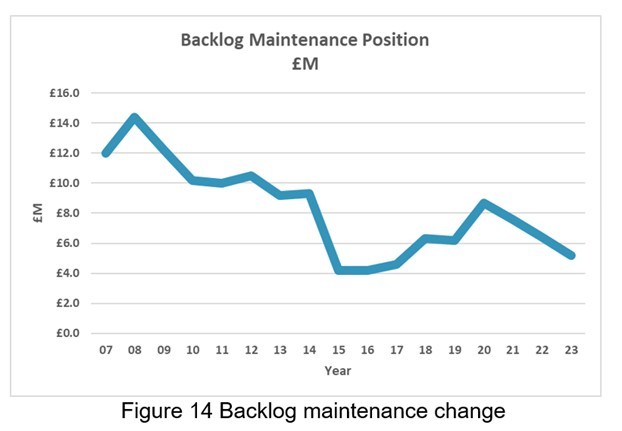
Table 20 below shows the category of backlog maintenance for each of the main sites.
| Site | High risk backlog | Significant risk backlog | Moderate risk backlog | Low risk backlog |
|---|---|---|---|---|
|
Northgate Hospital |
£0 |
£0 |
£0 |
£0 |
| St Georges Hospital |
£0 |
£0 |
£0 |
£0 |
| St Nicholas Hospital |
£0 |
£80,000 |
£350,000 |
£485,476 |
| Ferndene |
£0 |
£0 |
£0 |
£0 |
| Walkergate Park |
£0 |
£0 |
£0 |
£206,000 |
| Monkwearmouth |
£0 |
£0 |
£0 |
£100,000 |
| Hopewood Park |
£0 |
£0 |
£30,000 |
£350,000 |
| Carleton Clinic |
£0 |
£226,509 |
£1,368,440 |
£217,601 |
| Other Sites |
£0 |
£625,003 |
£269,979 |
£673,787 |
| Total |
£0 |
£931,512 |
£2,018,419 |
£2,032,864 |
Table 20 Backlog Position by Site
External Perspective
The Care Quality Commission have undertaken a number of comprehensive inspections of the Trust and continue to give an overall rating of outstanding.
- The Trust must ensure patients have access to a nurse call system in the event of an emergency, this was identified on a number of wards.
- The need to address the environmental issues associated with the Newcastle adult acute wards
- The environment at Alnwood did not support children and young people’s recovery and is linked to high levels of mechanical restraint, concerns were raised about access to external space.
The CQC identified a number of estates issues in the Cumbria estate including.
- The Trust must ensure patients have access to a nurse call system in the event of an emergency, this was identified on a number of wards.
- Poor environment at both Carleton Clinic and Yewdale.
A patient led assessment of the care environment (PLACE), has been carried out covering a wide range of patient and public areas including wards and outpatients departments.
The aim of the PLACE assessments is to provide a snapshot of how an organisation is performing against a range of non-clinical activities which impact on the patient experience of care. This includes cleanliness, the condition appearance and maintenance of healthcare premises, the extent to which the environment supports the delivery of care with privacy and dignity, the quality and availability of food and beverages, whether premises are equipped to meet the needs of dementia sufferers and how well hospital environments support those with disabilities.
The last assessment was carried out in 2022, the previous assessment being in 2019 with a gap occurring due to COVID. At the time of writing this strategy we are waiting for the scores to be published. In the 2019 assessment we scored above the national MH/LD average for “condition, appearance and maintenance" but slightly below in the areas of: privacy and dignity, dementia and disability. These scores reflect the good condition of our estate but suggest we need to focus on aspects of quality and functional suitability in order to improve scores.
Summary
The Trust operates a diverse estate providing a range of accommodation types spread across a large geographical area. The accommodation is also subject to a wide range of tenure including freehold, PFI, leasehold, licence and service level agreement.
Since the last Estate Strategy there have been significant improvements across the 6 facets.
Reductions in backlog maintenance position, bed numbers and number of sites has also helped to create an environment more suited to delivering fit for purpose healthcare.
However, the information also reveals a number of shortfalls in the condition of some Trust accommodation which will need to be targeted over the next 5 years, including:
- Improve any remaining areas of poor physical condition and high levels of backlog
- Improve functional suitability and quality of parts of the estate
- Address areas of under-utilised space
- Develop a strategy to exit poor quality / high-cost leasehold properties and re-provide
- Address asset sale potential for a range of properties
- Improve the safety of our in-patient estate to reduce risks
- Reduce carbon emissions and implement the Green Plan